Many tenants in Maryland are curious about the answer to the question, “Are Landlords Responsible For Bed Bugs?” The answer is frequently YES; landlords are liable for pests in the apartments they own and manage.
Before renting or leasing a structure, Maryland law specifies that landlords are responsible for eradication. When you move into a single-occupancy unit, such as a single family house, YOU are responsible for the eradication for the duration of your stay. The property owner is responsible for eradication in multi-occupancy units, such as apartments.
If you find yourself in this situation in a multi-occupancy unit there are bed bug lawyers that can help you.
The first step is to get an inspection to determine if your dealing with a bed bug situation. Most complex have their own general pest control company that usually don’t specialize in bed bugs. Here at ECO Bed Bug Maryland we specialize in bed bug detection and eradication.
Bed bugs are just not found in beds. You can find bed bugs in other areas of the home not just the bed.
If a home is heavily infested, bed bugs can be found in many different areas. The bedroom is the most common place to find bed bugs, but there is a bevy of other sites in the home they can hide, including:
• Edges of carpeting • In cracks of wooden flooring • In between furniture cushions • In drawer joints • Behind wallpaper and wall hangings • In or behind clocks • In window treatments • In woodwork joints • In screwheads
Bed bugs like to live in areas where humans like to rest or sleep. Their narrow bodies and ability to survive for months and sometimes up to a year without feeding make them excellent hiders. They have the potential to hide in mattresses and furniture for months before they’re seen. This is why it’s a good idea to be on the lookout for bed bugs and inspect bedding and furniture regularly.
Keep in mind that even the cleanest homes can have bed bugs. Vacuuming often will help pick up any bed bugs that may have hitched a ride into your home. If you use a bagless vacuum, cleaning the dust container and filters in hot water will get rid of bed bugs, larvae, and eggs. Sealing crevices and cracks in walls, woodwork, around outlets, floorboards, windows, and doors will discourage any bed bugs from traveling within the walls of your home.
Dirty laundry can also attract bed bugs. Worn clothing and slept-on sheets hold our sweat, oils, and scent—which can also draw in bed bugs. Dirty laundry serves a dual purpose for smelling like a meal and providing a hiding place for bed bugs. If there is no human host near, bed bugs like to live in dirty laundry until they can feed on human blood. This is an excellent motivator to clean up all the piles and baskets of laundry and wash clothes and bedding on a regular basis. If you use a shared laundry facility, transport your clothing in sealed plastic bags. If you have an active infestation at home, be sure to dispose of the original bag and use a new one to transport the clean items home. When removing items from the dryer, put them directly into the bag and fold them at home. Washing clothing and bedding in hot water and drying them on the highest dryer setting will help kill bed bugs, larvae, and eggs. Eliminating clutter in the home will reduce the potential hiding places for bed bugs.
If you discover bed bugs in your home contact us to schedule an inspection at (410) 929-3420.
After spring break many people like to bring home reminders of the vacation, such as personalized gifts, seashells, keychains, and souvenirs. One thing people don’t want to return home with is bed bugs.
Notorious for hitchhiking, bed bugs are opportunistic pests, taking advantage of any and all circumstances that will allow them to thrive; and spring break never fails to deliver. Unsuspecting warm bodies, numerous hiding places (e.g. luggage, purses, duffel bags, piles of clothes and bedding) and ample hitchhiking opportunities—it’s a bed bug’s dream come true!
Although you can’t safeguard your child against bed bugs all of the time, there are steps you can take to help minimize the chances of them bringing bed bugs into your home. Whether your child is traveling home from spring break, visiting for the weekend, or just popping in to do some laundry, bed bugs may be tagging along.
HOW TO PREVENT BED BUGS FROM INFESTING YOUR HOME
Once you get home from your travels, keep your luggage outside or in the garage so you can do a final inspection.
Inspect suitcases, bags or purses and boxes for signs of bed bugs prior to removal, especially if they were used for spring break travel.
Do not place items in your suitcase, duffle bag or backpack back in your drawer or closets.
Clothing items should be laundered immediately using high temp water and dryer settings. Duffle bags or backpacks can be put in a dryer for 45 minutes on high heat as this will kill any eggs or bed bugs that could have made it back.
Vacuum any luggage, purses, backpacks and bags that were used as well as the areas surrounding them. Discard the vacuum contents in the trash and take it out immediately.
Wipe down hard-surfaced items such as laptops and cases.
Bedrooms should be inspected prior to unpacking to avoid any possibilities of cross-contamination. A quick look at the mattress as well as any other furniture in the room can help reduce the likelihood of any hideaways.
If you don’t have one already, it’s a good idea to purchase a mattress and box spring encasement. While encasements can’t prevent bed bugs from entering dorm rooms, they can prevent bed bugs from burrowing deep into the seams of the mattress and box spring. An encasement that has a bug-proof zipper is best.
I think I have bed bugs! What do I do?
If you do spot any dark spots of fecal matter, light brown colored skins, or live bugs themselves, you are going to want to contact the professionals at ECO Bed Bug Exterminators Baltimore. Bed bugs are not a fix it yourself solution since they are really good at hiding and multiplying. These pests are not good company to have and you may find yourself in a nightmare if you try to take care of matters on your own. Hopefully, with enough education and understanding of how bed bugs can affect you, you will not have to worry about them coming back with you on your next trip.
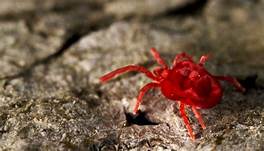
From time to time we get calls from customers who have found these tiny red bugs thinking it may be a bed bug. The thought of these tiny bugs taking over your home is sure to make your skin crawl. The first step to controlling a pest problem, is correctly identifying the pest. This can be challenging when pests leave behind the same clues. Clover mites and bed bugs do share a key infestation sign that can make it difficult to tell them apart. We’ve gathered information about clover mites and bed bugs to help you spot the differences between them.
While they don’t pose any danger or risks, they’re still pesky to have around and can be discouraging to see. Clover mites are known for being tiny and bright red. These pests are less than 1mm in length. Like other arachnids, they have eight legs. However, their front two legs are longer than their other legs. Their placement near their head leads to them being mistaken for antennae. Clover mites emerge in the spring when temperatures are still cool. They often sneak into homes by crawling on vegetation close to homes.
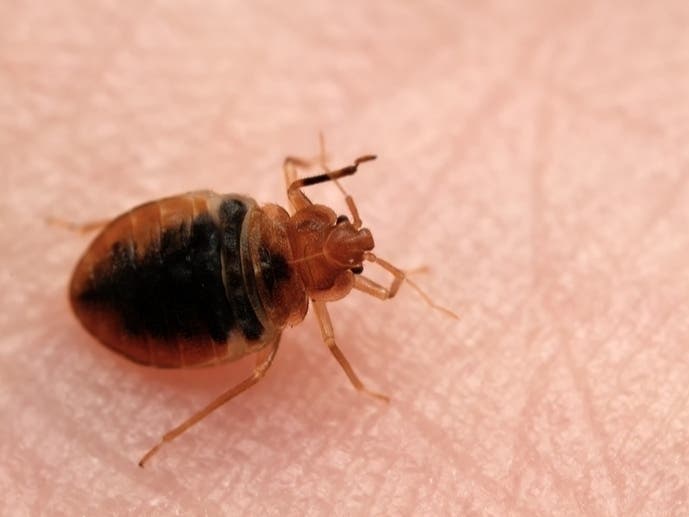
Bed bugs (Cimex lectularius) are small, flat, parasitic insects that feed solely on the blood of people and animals while they sleep. After a feeding, their bodies take on a reddish hue. They are reddish-brown in color, wingless, range from 1mm to 7mm (roughly the size of Lincoln’s head on a penny), and can live several months without a blood meal. Bed bugs are active at night and can infest homes year-round. These pests are great at hiding, which can make it difficult to spot them.
CLOVER MITE & BED BUG SIMILARITIES
Clover mites and bed bugs aren’t similar in appearance. However, they still have a few tricks up their sleeves. One of the main concerns of a clover mite infestation is the red stain they leave behind when crushed. This spot is created from the pigmentation of their skin. Bed bugs also leave behind red blood stains when they are crushed. Bed bug droppings can also create dark stains. The spots of these pests can lead to confusion about which pest has invaded your home. These pests also share the ability to multiply quickly, which can lead to large infestations.
HOW TO IDENTIFY AN INFESTATION
Since clover mites and bed bugs share a common warning sign, it may not always be easy to know which pest has taken over your home. Thankfully, there are a few things you can look for to spot the difference between the two pests.
Appearance:
Bed bugs and clover mites look distinctly different. If you’re able to spot one of these pests, the color and size will help you correctly identify it. Bed bugs are brown and will be larger than clover mites. Bed bugs are about the size of an apple seed, while clover mites are smaller than a pinhead.
Location:
Clover mites don’t typically hang out near beds. Clover mites tend to stick to window sills, however, it’s unlikely you’ll find any in your bed, but it’s worth keeping in mind in case you start to notice red dots on your curtains. They are usually found in large numbers on the sunny side of the structure, gathered together on siding, bricks and around outside window ledges. When inside houses or businesses, they will be gathered in the same huge numbers on window sills, windows, and walls. A bed bug infestation will likely occur in bedrooms since this is where they can easily access a host. They will spread to furniture and fabric in the room.
Bug Bites:
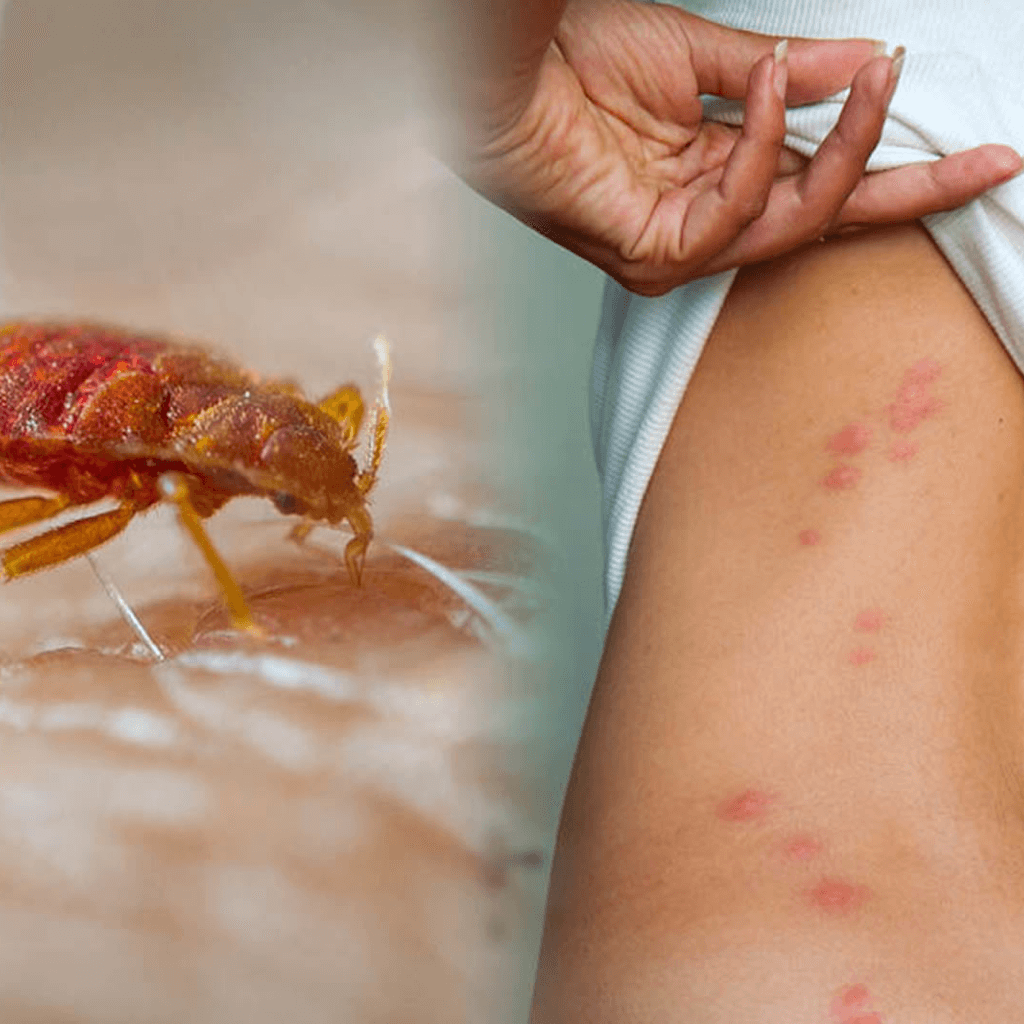
Clover mites feed on plants and will not bite humans or cause any health-related problems like their close cousin the dust mite. However, they can cause mild skin irritation for those who are allergic. When bed bugs bite, it can lead to itchy, red bumps that are often clustered together. They typically appear on areas that are exposed when sleeping like your arms and legs.
What will kill Clover mites?
If clover mites have invaded your home, it’s important to remember to not crush them. This will prevent staining your household items. Instead, you can use a vacuum or wet rag to remove them. If you are looking for an all-natural alternative you can apply a natural, plant-based insecticide spray or you can use an indoor-safe insecticide like permethrin, diazinon, bifenthrin, or chlorpyrifos. Make sure you apply the insecticide directly to the mites. However, if you’re dealing with an infestation then it may require a professional to serve up the correct cocktail to discourage them from continuing their residency at your property.
The holiday season is upon us and amid all the joy and celebrations some people may be dealing with unwanted guests.
We’ve all heard about the problem of bed bugs in hotels. But this isn’t the only risk travelers might face. Recent years have seen an increase in reports of bed bugs on airplanes. And these insects don’t distinguish between economy and business class!
Airplanes provide an ideal environment for bed bugs to thrive in. People’s belongings are left unattended for hours. Passengers sit close to each other and do not move for long periods. In such confined spaces, it’s not surprising that bugs can be transmitted from person to person.
As much as we anticipate the festive holiday season, it can be a hectic time for those traveling near and far to celebrate with family and friends. Even though we are still dealing with COVID people are traveling again. For those who are traveling, it’s more important than ever to follow safety measures like wearing masks and regular handwashing. In addition to germs, no one wants to share bed bugs.
S.L.E.E.P.: Bed bug precautions to remember
Travelers should check for signs of bed bugs anywhere they stay, and can prevent contact and travel with these pests by remembering the following S.L.E.E.P. tips.
Survey your hotel room for signs of a bed bug infestation. Bed bugs are not a sanitation issue, so they can be found in a five-star hotel as well as a one-star motel. Look for brown or red spots on sheets and other fabrics, and be alert for a telltale musty, sweet odor.
Lift and look. Bed bugs tend to settle in close proximity to their food source: you! During the day, these nocturnal insects will disappear into crevices in mattresses, box springs, bedding, furniture, hollow bedposts, baseboards, pictures and even torn wallpaper. So make sure to lift and look around all possible hiding spots.
Elevate your luggage and other items. Carefully inspect the hotel’s luggage rack, and if it shows no signs of being a bed bug haven, use it to keep your suitcase off the floor and away from the bed. Also be sure to station the rack away from the wall before use to reduce the likelihood of a bed bug crawling up the wall and getting into your things.
Examine your luggage while repacking as well as after you get home, to ensure you haven’t picked up any unwelcome visitors. It’s also wise to unpack in your garage or utility room, just to be sure your items are bed-bug-free before returning them to the bedroom. Machine-dry your clothes in a hot drier to ensure no bedbugs are snuggling up in them.
Professional help for bed bug issues is out there, so use it! Because bed bugs can survive extreme temperatures (up to 113 degrees Fahrenheit), can live for over a year without food and are extremely difficult to kill, treating an infestation requires the skill of an experienced, licensed, professional pest control operator.
If you do find bed bugs contact us to schedule an inspection.
Thanksgiving is almost here, and we all know how stressful it can be to get ready for the big day. For many homeowners, this means traveling to visit their loved ones and all of the hassles associated with it. The last thing on your mind is bed bugs and unfortunately, humans aren’t the only species that do a lot of traveling around the holiday.
Bed bugs will be taking the opportunity to catch a ride on the nearest suitcase, piece of clothing, or handbag. So after leaving the family, and traveling back home, bed bugs could be hitching a ride. It’s important to keep an eye out for these bugs. If you don’t, you could face an unwanted infestation when you get home. Unfortunately, bed bugs won’t just stop in for a friendly visit. Just one bed bug getting inside your home could be the beginning of a stressful infestation.
Important tips for you while keeping the risk of bed bugs to an absolute minimum:
Do research on hotels, motels, and inns before you reserve your sleeping accommodations to make sure reviews don’t mention bed bugs.
At hotels, pull back the sheets and inspect the mattress seams, particularly at the corners, for telltale stains or spots. If you see anything suspect, notify management and change rooms/establishments immediately.
Thoroughly inspect the entire room before unpacking, including behind the headboard and in sofas/chairs. If any pests are spotted, change rooms/establishments immediately.
If you do need to change rooms, be sure that you do not move to a room adjacent and/or directly above/below the suspected infestation. Bed bugs can easily hitchhike via housekeeping carts, luggage and even through wall sockets. If an infestation is spreading, it typically does so in the rooms closest to the origin.
Pack your clothing in airtight plastic bags within your suitcase. Take along extra airtight bags for things you buy or for dirty laundry.
Consider placing your suitcase in a plastic trash bag or protective cover during the duration of your trip to ensure that bed bugs cannot take up residence there prior to departure.
Watch for bed bugs in taxis, rideshare, buses, trains, and planes, especially on headrests.
Think you may have brought bed bugs home?
If you do come in contact with a bed bug infestation during your travels, it can be very hard to prevent them from infesting your house. Follow these steps after returning to decrease the chances of an infestation:
Carefully examine the suitcase for bed bugs and other signs. Pay close attention to zippers and creases as they like to hide there.
Remember: bed bugs travel by hitching rides. After your trip, inspect your suitcases before bringing them into the house. Store luggage in the garage our until you have the opportunity to examine them. Vacuum your suitcase thoroughly before storing away. Consider using a garment hand steamer to steam your luggage, which will kill any bed bugs or eggs that may have hitched a ride home.
Wash all of your clothes – even those that have not been worn – in hot water to ensure that any bed bugs that may have made it that far are not placed into your drawers/closet.
Contact pest professionals for an inspection if you begin seeing signs of an infestation.
We know from experience that bed bugs are hard to get rid of and a horrible experience for people everywhere. We offer a comprehensive bed bug control service that allows us to quickly identify an infestation. Our effective heat treatment technology gets rid of all of those developmental stages of bed bugs and it is eco-friendly. If you have bed bug problems in your home, ECO Bed Bug Exterminators Baltimore has the solution. Give us a call today at (410) 324-6223 and ask about our bed bug solutions.
Halloween is filled with everything spooky, scary, and a little bit creepy. And while we love to decorate the last thing you want is to find the real things lurking around your home. The name “bed bug” is slightly deceiving, as this creature can be found in more places than just between the sheets.
Despite what their name implies, their flattened bodies also allow them to conceal themselves in cracks and crevices around the room, such as in floorboards, skirting boards, or within furniture. However, they usually tend to stay close to anywhere you or a pet will be sleeping – which is why over a third (35%) of them are found in the box springs of a mattress, 23% are found in the mattress itself and 13% are found in the bed frame or headboard. It will travel within your home looking for you, or some other warm blooded animal, on which to feed.
1. Don’t Store Items Under Your Bed
Storing items under your bed creates opportunities for bed bugs to hide near your mattress. You may also unknowingly store an infested item.
2. Store Items in Plastic Containers
Bed bugs find it difficult to crawl on smooth surfaces such as glass or plastic. Keeping your storage items in a plastic container or plastic bag helps to prevent spreading.
3. Remove Clutter From the Floor
Keep your clothes off the floor. If a wandering bed bug happens to latch onto your sweater, you run the risk of infecting your dresser or closet. Plus, clutter increases the difficulty in eliminating bed bugs once they’ve been established.
4. Dust Mite-Proof Encasements
Cover your mattress or box spring in dust mite-proof encasements to create a barrier between you and any potential bed bugs. Plus, if you do have bed bugs, an encasement will trap the bed bugs and they will die of starvation.
5. Vacuum Regularly
This prevention method helps you remove stray bed bugs. Make sure to hoover all hiding hotspots, such as dust ruffles, under sofa cushions and under the bed. For further prevention, dispose of the vacuum bag in an outside trash can.
6. Keep Clothes off the Bed
You don’t know whose bed these bugs have infested and whose bed they haven’t. It’s best to keep your clothes off any beds if you want to prevent bed bugs from coming into your home. With that in mind, keep other people’s clothes off your bed. You never know if they may be transporting a bed bug from their home. Instead of placing guests’ coats on your bed, hang them in the coat closet.
7. Inspect your Lodging Area
Before unpacking your clothes in your new sleeping arrangements, such as a hotel, motel, or dorm room, inspect the space. Check curtains, the carpet, the walls, and surrounding areas for any signs of bed bugs. Most importantly, check the bed for any signs. If you spot a potential infestation, ask for another room. Avoid placing your clothes on the bed.
8. Wash Clothes and Luggage After Traveling
Ensure your travels don’t bring home a bed bug. Immediately wash your clothes and clean any luggage, including suitcases, backpacks, and purses. If you share laundry facilities with others, such as in apartment complex, laundromats, student accommodation, take extra caution. When you transport your items to be washed, keep them in a plastic bag and once they are washed, remove them from the dryer and place them straight back in the bag. Fold them at home where it’s safer to do so.
9. Wash Sheets on the Highest Setting
About once a week, wash your bed linens at the highest temperature. The heat can help kill bed bugs and their eggs.
10. Avoid Taking Furniture From Curbs or Dumpsters
A free couch on the side of the road can be tempting. But bringing it into your home can lead to a grave bed bug infestation. Avoid taking any furniture from curbs or dumpsters, as bed bugs may have infested them.
11. Keep Your Bed Sheets off the Ground
When making your bed or sleeping, make sure your sheets are not touching the floor. A hanging sheet allows a wandering bed bug to crawl up to your bed.
Bed bugs are small, reddish-brown, parasitic oval-shaped insects roughly the size of an apple seed. They are most active at night, and they feed on blood. When they’re inside a home, they can be attracted to sleeping humans by cues such as carbon dioxide and body heat. They may emerge from their resting spots under mattresses, around headboards or in furniture to find their next meal, sometimes leaving small bites, which may resemble mosquito or flea bites. Generally, bed bugs feed every 5 to 10 days.
Bed bugs doesn’t just infest houses and hotel rooms, they can make a home almost anywhere, including daycares, schools and colleges. Bed bugs are great hitchhikers, so how can you help keep your kids from bringing them home? Read on to learn more about bed bugs and some important bed bug prevention tips.
How do you keep bed bugs from coming home from school?
Upon returning home from school, check your kid’s backpacks, jackets and clothing and keeping these items in a separate area of the house.
Keep backpacks in plastic bags or closed storage bins. At minimum, do not leave backpacks in or near bedrooms.
If bed bugs have been found at their school, have children disrobe immediately upon coming home, and place clothing in sealed plastic bags.
Place clothing in a dryer (medium-high heat for 30-45 minutes) and throw out the plastic bag. Bed bugs can’t survive high heat.
Engage the school administration. Ask them what precautionary and proactive measures they are taking to prevent the introduction and spread of bed bugs.
Call the Professionals
Treating bed bugs is not something you want to do yourself. It can be costly and ineffective, and bed bugs are notoriously difficult to get rid of. If bed bugs have found their way into your home, or you think they might have, call ECO Bed Bug Exterminators at 410-324-6223 to get an inspection and a customized treatment plan.
It can be difficult to distinguish bed bug bites from other insect bites or rashes. In general, the sites of bed bug bites usually are:
1.Red, often with a darker red spot in the middle
2. Itchy
3.Arranged in a rough line or in a cluster
4. Located on the face, neck, arms and hands. Some people have no reaction to bed bug bites, while others experience an allergic reaction that can include severe itching, blisters or hives.
At-Home and OTC Treatments for Bed Bugs
For the bed bug bites themselves, there are a few steps you can take to soothe the itch and prevent them from becoming infected:
1. Don’t scratch them.Scratching can cause them to be inflamed and you run the risk of an infection and can sometimes leave a dark mark on skin that you might not want there.
2. Use ice packs several times a day to soothe the bites and help take the itchy sensation away.
3. Moisturize the affected skin. Moisturizing can have a cooling effect, which also should help cut down on itching.
4. Use over-the counter topical creams or products that can help address itching. These can include products with:
— Antihistamines.
— Calamine lotion.
— Colloidal oatmeal.
— Hydrocortisone 1%.
— Lanolin, but not if you’re allergic to it.
— Sarna, a cream that contains camphor and menthol in its original formula.
These products work best when applied to damp skin. Usually, the bites will go away after a week or two.
When to See a Doctor for Bed Bug Bites
Most bed bug bites require no medical treatment. Talk to your doctor if you experience an allergic reaction to the bites or if you develop swollen red skin with hives, they are oozing puss or a skin infection after scratching the bites.
Doctors often will use a prescription-strength steroid cream for bug bites or an antibiotic if there’s an infection.
National Bed Bug Awareness Week 2021 is June 6-12. Chicago, Baltimore and Washington, D.C. are the top three worst cities for bed bugs, according to a 2021 ranking by pest control company Orkin. (Shutterstock)
Chicago, Baltimore and Washington, D.C. are the top three worst cities for bed bugs, according to a 2021 ranking by pest control company Orkin.
ACROSS AMERICA — Most U.S. cities can claim bragging rights for at least a few things. Maybe it has good schools or a lively music scene. Maybe the city is rich in history or has a booming economy. Perhaps it’s just a great place to live.
One thing you probably don’t associate with your city? Bed bugs. Turns out these tiny hitchhiking pests are quite fond of our city, according to the latest numbers available through Atlanta-based Orkin, a company that specializes in pest control services.
In fact, Baltimore ranked second on the 2021 list for the second year in a row, according to Orkin.
Cities were ranked according to where Orkin performed the most bed bug treatments between Dec. 1, 2019, and Nov. 30, 2020. The ranking includes both residential and commercial treatments.
In just a few days, the National Pest Management Association kicks off Bed Bug Awareness Week, which runs June 6-12. The goal of the campaign is to help people recognize a bed bug infestation and know how to curb it.
Also, the number of people itching to travel is growing as more Americans become vaccinated against COVID-19.
Over Memorial Day weekend, the Transportation Security Administration screened about 7.1 million people at U.S. airport checkpoints. On Sunday, about 1.9 million people traveled — eight times more than on the same day in 2020.
Since bed bugs are widely associated with travel, people must stay vigilant, according to Cindy Mannes, executive director of the Professional Pest Management Alliance — especially after months of coronavirus-related restrictions and lockdowns.
“Bed bugs can survive for several months without a blood meal and could be hungry if they have survived unnoticed after decreased travel amid the pandemic,” Mannes said in a news release.
What is a bed bug? These insects are tiny in size — just under a quarter-inch long, according to Orkin. They’re usually dark brown or red in color and are hematophagous, meaning blood is their only food source. Bed bugs take blood meals from sleeping humans and can travel from place to place with ease, stowing away in things such as luggage, purses and other personal belongings.
If you plan to travel this summer, there are a few things you can do to prevent bed bugs from coming home with you. Orkin recommends people follow the “SLEEP” method to crack down on possible bed bug infestations:
S: Survey the room for signs of an infestation. Be on the lookout for tiny, black, ink-colored stains on mattress seams, in soft furniture and behind headboards. Bed bugs can even hide out in electrical outlets and picture frames.
L: Lift and look in bed bug hiding spots: the mattress, box spring and other furniture, as well as behind baseboards, pictures and even torn wallpaper.
E: Elevate luggage away from the bed and wall. The safest places are in the bathroom or on counters.
E: Examine your luggage carefully while repacking and once you return home from a trip. Always store luggage away from the bed. Be sure to also examine all secondhand furniture and clothing before bringing it in your home and inspect after guests visit.
P: Place all dryer-safe clothing from your luggage in the dryer for at least 45 minutes at the highest setting after you return home.
If you need more guidance on eliminating bed bugs from your home, the Environmental Protection Agency has a step-by-step guide for evaluating and treating the infestation.