
Why Treating Only One Room Doesn’t Always Solve a Bed Bug Problem

It’s one of the most common questions we hear:

“The bed bugs are only in one bedroom. Can’t we just treat that room?”

Sometimes the answer is yes.

Sometimes it’s no.

The right treatment depends on where bed bugs are actually hiding—not just where they’re being seen.

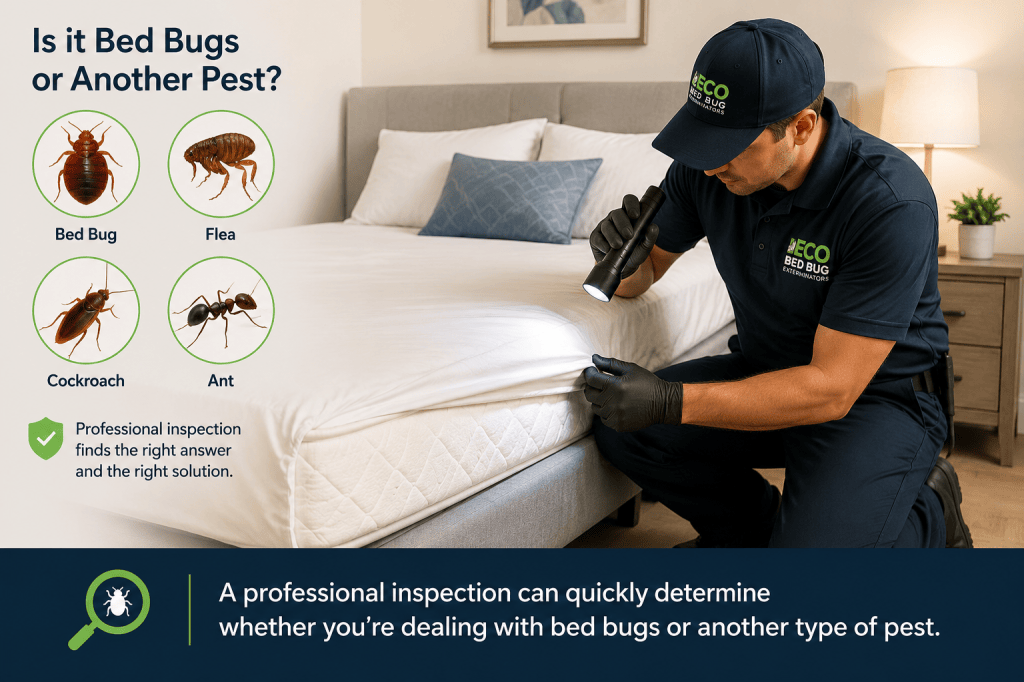
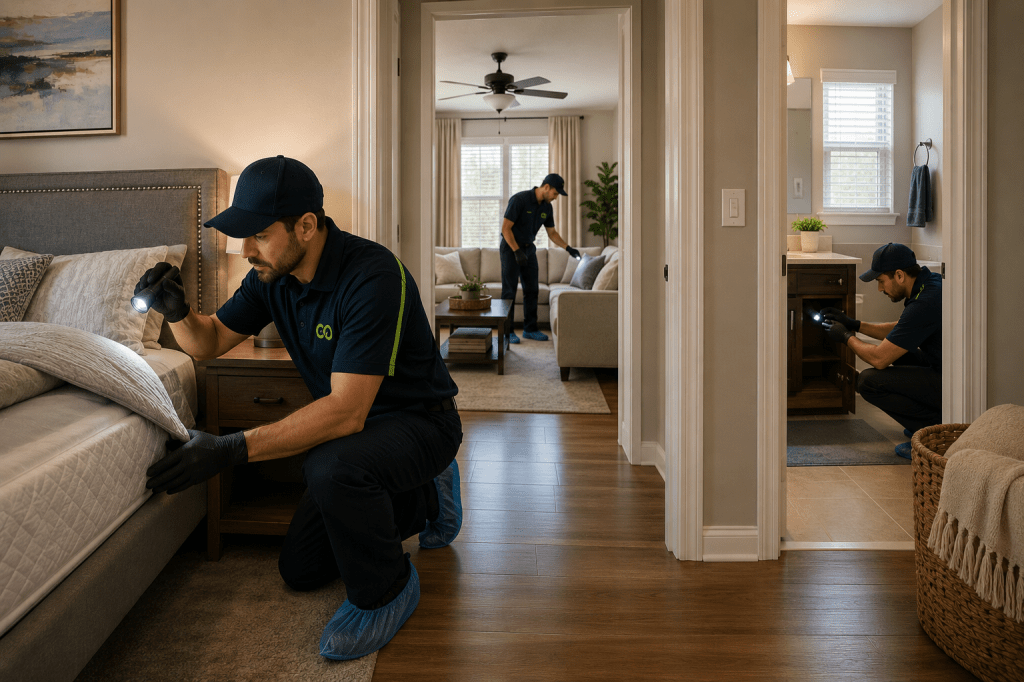
That’s why a professional inspection is one of the most important steps before choosing a treatment plan.


Bed Bugs Don’t Always Stay in One Room

Finding bed bugs in one bedroom doesn’t automatically mean they’re only living there.

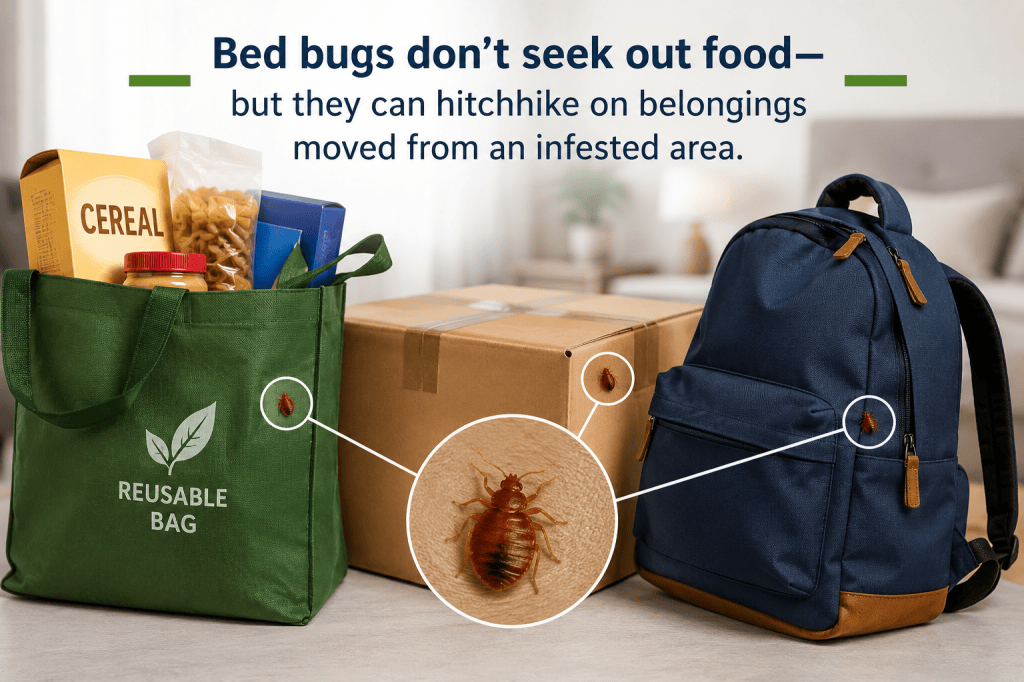
Bed bugs can move through wall voids, around plumbing, along baseboards, and on personal belongings such as backpacks, clothing, and luggage.

It’s common for activity to begin in one room and gradually spread to nearby areas.


Seeing Bed Bugs in One Room Doesn’t Tell the Whole Story

Just because you’re finding bites—or even seeing live bed bugs—in one room doesn’t necessarily mean that’s the only area affected.

Sometimes we inspect a home and confirm the activity is isolated.

Other times, we discover evidence in additional bedrooms, living rooms, or other areas where no one suspected bed bugs.

That’s why inspections matter.


Why a Professional Inspection Can Save You Money

Treating more areas than necessary isn’t ideal.

But neither is treating too little.

A thorough inspection helps determine:

✔ Where bed bugs are active.

✔ Whether the infestation appears isolated or more widespread.

✔ Which treatment option makes the most sense for your home.

The goal isn’t to recommend the biggest treatment—it’s to recommend the right treatment.


When a Single-Room Treatment May Be Appropriate

Every home is different.

Depending on the inspection findings, a single-room treatment may be an effective option when activity is truly limited to one area.

However, if bed bugs have spread beyond that room, treating only one space may leave active areas behind.

That’s why every recommendation should be based on inspection findings—not assumptions.


The Goal Is Long-Term Success

No one wants to pay for unnecessary treatment.

But no one wants to repeat the process because bed bugs were hiding somewhere that wasn’t addressed either.

A treatment plan based on a thorough inspection helps improve the chances of long-term success while avoiding unnecessary work.


Let the Evidence Guide the Treatment

Every bed bug infestation is different.

At ECO Bed Bug Exterminators, we don’t believe in one-size-fits-all solutions. We begin with a careful inspection, identify where activity is present, and recommend the treatment that best fits your situation.

Sometimes that’s one room.

Sometimes it’s multiple rooms.

Sometimes it’s the entire home.

The important thing is making the decision based on evidence—not guesswork.


Frequently Asked Questions

Can bed bugs stay in just one room?

Yes. In some cases, bed bugs remain isolated to a single room, especially if the infestation is caught early.

Why would a technician recommend treating more than one room?

Because inspections sometimes reveal activity beyond the room where bed bugs were first noticed.

Is treating the whole home always necessary?

No. The right treatment depends on the inspection findings and how far the infestation has spread.

Bed Bugs vs. Carpet Beetles: How to Tell the Difference

Think you have bed bugs? Many homeowners actually discover carpet beetles instead. Learn the key differences between bed bugs, carpet beetles, bites, signs, and when it’s time to schedule an inspection.

Finding small insects or unexplained skin irritation in your home can be alarming. Many people immediately assume they have bed bugs, but that’s not always the case. At ECO Bed Bug Exterminators, we’ve performed countless inspections where homeowners were convinced they had bed bugs, only to discover the problem was actually carpet beetles.

Although both pests can be found in bedrooms, they behave very differently, require different treatments, and leave different signs behind. Understanding those differences can help you decide what steps to take next.


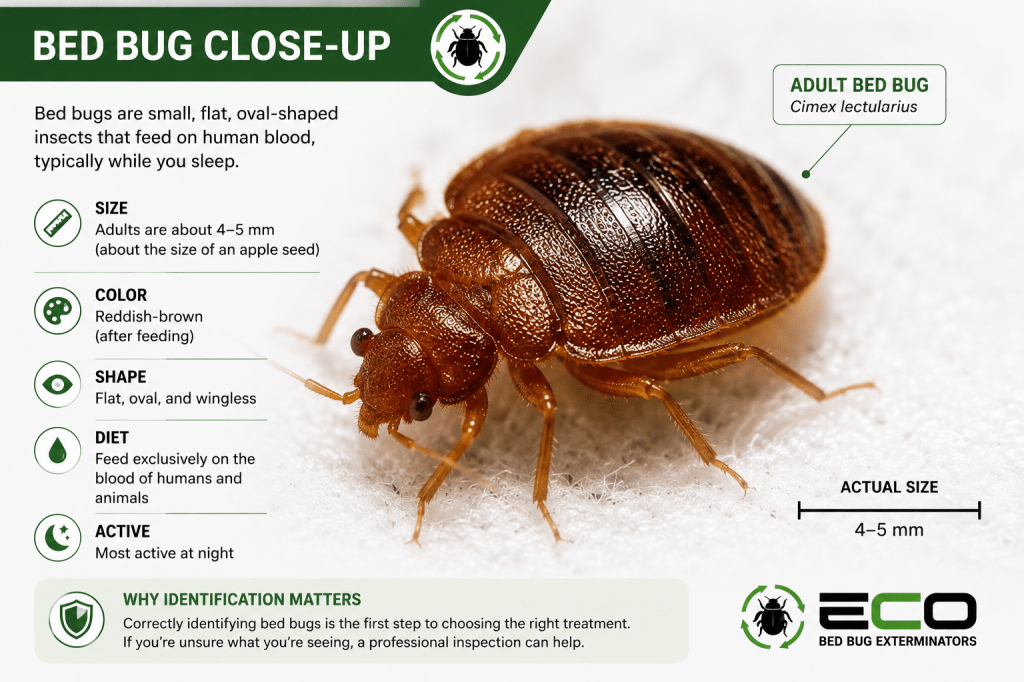
What Are Bed Bugs?

Bed bugs are small, reddish-brown insects that feed exclusively on blood, usually while people are sleeping. They typically hide close to where people rest, including:

  • Mattress seams
  • Box springs
  • Bed frames
  • Headboards
  • Nightstands
  • Upholstered furniture
  • Cracks and crevices near the bed

Because they feed on blood, bed bugs leave behind specific evidence that trained inspectors look for during an inspection.


What Are Carpet Beetles?

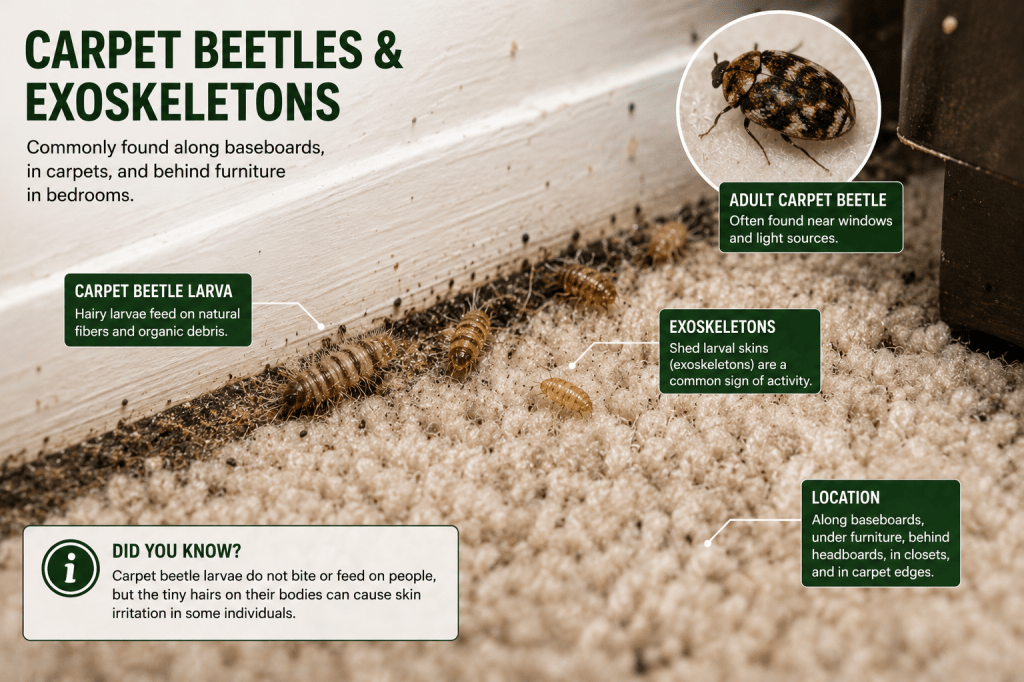
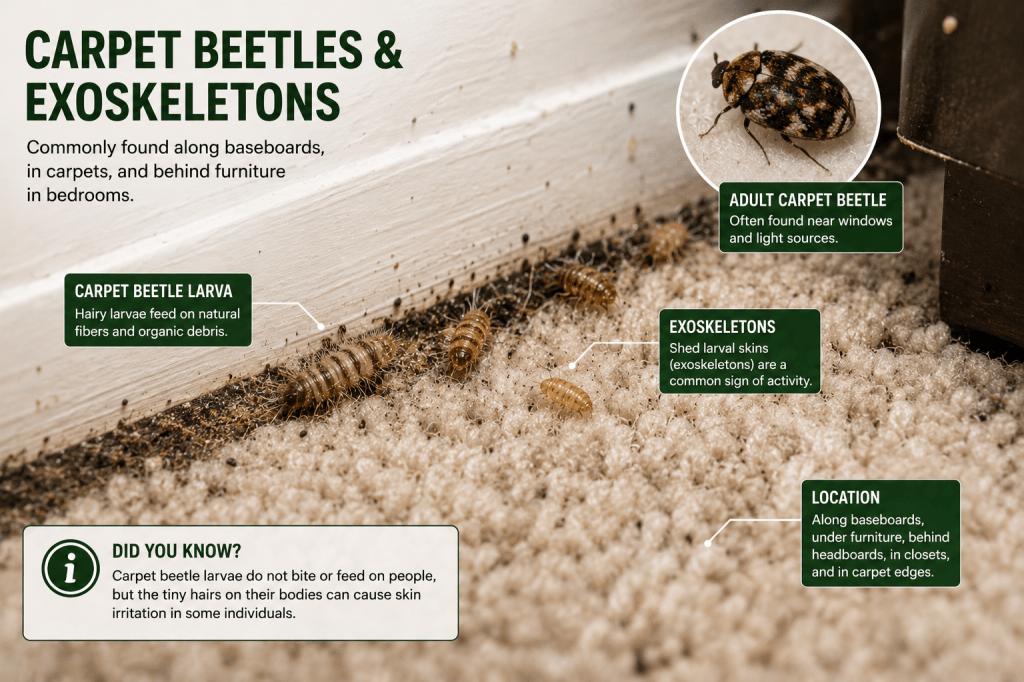
Carpet beetles are small insects that feed on natural materials such as wool, feathers, silk, fur, pet hair, lint, and other organic fibers. Unlike bed bugs, carpet beetles do not feed on people.

The larvae are covered with tiny hairs that can cause skin irritation in some individuals. This reaction is often mistaken for bed bug bites.

Adult carpet beetles are commonly found near windows because they are attracted to light.

Bed Bugs vs. Carpet Beetles: Quick Comparison

Can Carpet Beetles Cause Skin Irritation?

Yes.

Although carpet beetles do not bite, some people develop an allergic reaction when their skin comes into contact with the tiny hairs left behind by carpet beetle larvae.

These reactions can resemble insect bites, making it easy to mistake them for bed bugs. Because skin reactions can have many possible causes, it’s important not to rely on skin irritation alone to determine whether bed bugs are present. If you have persistent or concerning skin symptoms, consult a healthcare provider or dermatologist.


Signs of Bed Bugs

Common signs include:

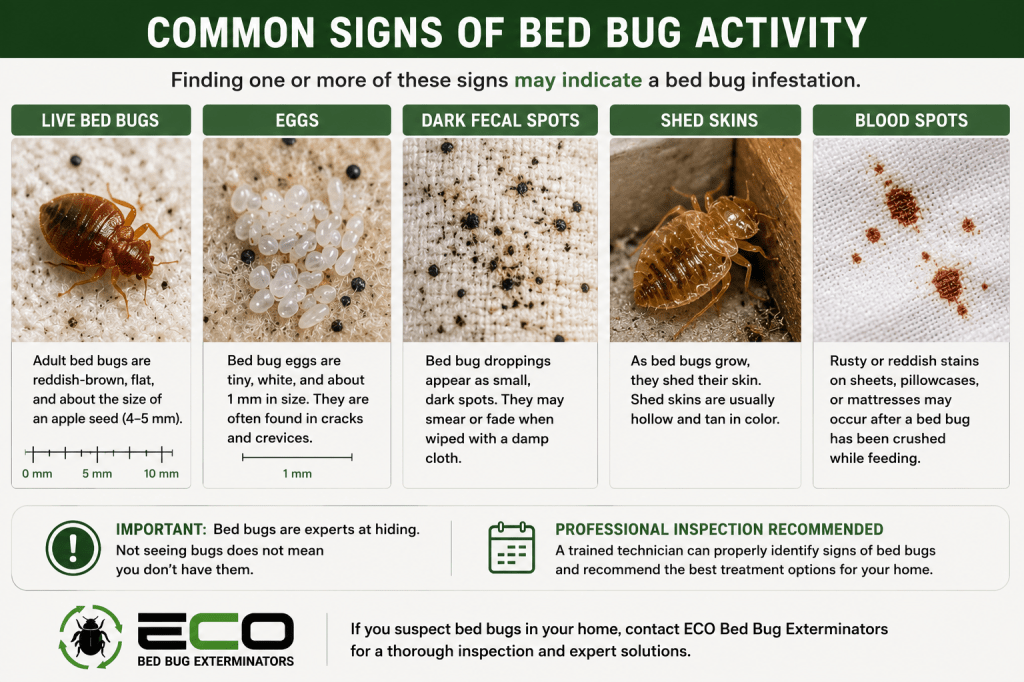
  • Live bed bugs
  • Tiny white eggs
  • Black fecal spots
  • Shed skins
  • Blood spots on bedding
  • Multiple bugs hiding around the bed

Signs of Carpet Beetles

Common signs include:

  • Small shed larval skins (exoskeletons)
  • Tiny larvae with bristly hairs
  • Damage to wool, clothing, rugs, or upholstered items
  • Adult carpet beetles near windows
  • Larvae behind headboards, under furniture, in closets, or along baseboards

Why People Confuse Them

Many homeowners contact us because they wake up with unexplained skin irritation and immediately suspect bed bugs. During an inspection, however, our technicians sometimes find carpet beetle exoskeletons instead of any evidence of bed bugs.

That’s why a thorough inspection is important before deciding on a treatment plan. Treating for bed bugs when the actual issue is carpet beetles—or another cause entirely—can waste time and money.


When Should You Schedule an Inspection?

If you’re experiencing unexplained bites or skin irritation but haven’t found clear evidence of bed bugs, a professional inspection can help identify what’s actually causing the problem.

An inspection may help determine whether the issue involves:

  • Bed bugs
  • Carpet beetles
  • Another household pest
  • No evidence of an active bed bug infestation

Identifying the correct issue first allows you to choose the most appropriate next steps.


Frequently Asked Questions

Can carpet beetles bite?

No. Carpet beetles do not bite or feed on people. However, some individuals may experience skin irritation from the hairs on carpet beetle larvae.

Do carpet beetles live in beds?

They can occasionally be found around beds, especially if natural fibers, dust, lint, or pet hair are present. Unlike bed bugs, they are not dependent on beds for food.

Can I have both bed bugs and carpet beetles?

Yes. Although uncommon, it’s possible for both pests to be present in the same home. A professional inspection can help determine what evidence is actually present.

Should I throw away my mattress?

Not necessarily. A mattress usually does not need to be discarded simply because bed bugs or carpet beetles are suspected. The right approach depends on the inspection findings.


Need Help Identifying the Problem?

If you’re unsure whether you’re dealing with bed bugs or carpet beetles, ECO Bed Bug Exterminators can help. Our inspections are designed to identify evidence of bed bug activity and help you understand the next steps based on what is found.

Before You Unpack: One Simple Dorm Room Habit Every College Parent Should Know

Move-in day is exciting. Taking five minutes before unpacking can help your student start the semester with greater confidence.


A New Chapter Begins

The car is loaded.

The GPS is set.

Your student is about to begin one of the biggest adventures of their life.

Move-in day is a mix of excitement, anticipation, and maybe just a few emotions for parents watching their child begin this new chapter.

Boxes are stacked.

The hallway is busy.

Everyone is eager to unpack and get settled.

Before you start making the bed or unpacking those first boxes, take just a few minutes to look around.

It may be one of the easiest—and smartest—things you do all day.


Why This Simple Habit Matters

One of the most common assumptions parents make is:

“It’s a new dorm, so everything should be fine.”

While many residence halls are well maintained, bed bugs aren’t attracted to old buildings or dirty rooms.

They’re expert hitchhikers.

They travel with people and their belongings.

Suitcases.

Backpacks.

Duffel bags.

Laundry bags.

Moving boxes.

That’s why a quick inspection before unpacking is always a good habit, regardless of where your student is living.


💡 ECO Insight

Think of it the same way you would check that a smoke detector works after moving into a new home.

You don’t expect something to be wrong.

You simply want the peace of mind that comes from knowing everything appears to be in good order before settling in.


Your Five-Minute Dorm Room Check

Before unpacking, take a quick look at:

✔ Mattress seams and edges

✔ Bed frame joints

✔ The headboard

✔ Upholstered chairs or couches (if provided)

✔ Around the bed, baseboards, and nearby floor

You aren’t searching for perfection.

You’re simply taking a few moments to notice anything that seems unusual.

If you do have concerns, it’s much easier to notify campus housing before your belongings are unpacked throughout the room.


Myth or Fact?

Myth

“If the dorm is clean, there can’t be bed bugs.”

Fact

Bed bugs aren’t attracted to dirt or clutter.

They move from place to place by hitchhiking on personal belongings.

That’s why awareness—not appearance—is the best first step.


A Few Facts That Surprise Most Parents

Many families are surprised to learn:

  • Bed bugs cannot fly or jump.
  • They prefer to stay close to where people sleep.
  • Some people develop noticeable bite reactions, while others may not react at all.
  • Discovering a concern before unpacking is much easier than finding one after everything has been put away.

Sometimes knowledge is the best thing you can pack on move-in day.


Keep It in Perspective

Here’s the good news.

Most college students will never experience a bed bug problem in their dorm room.

This article isn’t meant to create concern.

It’s simply meant to encourage one practical habit that can help parents and students begin the semester with confidence.

✔ Bed bugs can be introduced into any shared living environment by hitchhiking on belongings.

A few extra minutes today can provide valuable peace of mind tomorrow.


What You Learned Today

Before unpacking, remember:

✔ They aren’t attracted to dirt or older buildings.

✔ A five-minute inspection is an easy habit that can help you recognize anything unusual before unpacking.

✔ If something doesn’t look right, notify campus housing before settling into the room.


One Last Thought

Move-in day is about much more than carrying boxes.

It’s the beginning of new friendships, new experiences, and new opportunities.

Taking a few minutes to inspect the sleeping area isn’t about expecting a problem.

It’s about starting this exciting chapter with confidence.

Because the memories your student brings home from college should be stories, friendships, and accomplishments—not unwanted hitchhikers.


📚 From the ECO Learning Center

At ECO Bed Bug Exterminators, we believe education is one of the most effective tools for prevention.

Our goal isn’t simply to provide professional bed bug services. We also want to help families understand how bed bugs spread, recognize potential concerns early, and make informed decisions with confidence.

Whether your student is attending college in Maryland, heading to another state, or returning home during school breaks, we hope this article provides practical information you can use throughout the year.

DIY Bed Bug Fixes vs Reality—What Maryland Homeowners Should Know


🧂 Baking Soda, Cleaning Hacks & Internet Advice

If you’ve been searching for ways to deal with bed bugs, you’ve probably come across advice like:

  • Sprinkle baking soda
  • Deep clean your mattress
  • Use DIY cleaning kits

It sounds easy—and that’s the problem.

👉 Most of these methods don’t actually solve bed bug infestations.


⚠️ Let’s Clear This Up Quickly

Baking soda:

✔️ Can help with odors
✔️ Can absorb moisture

But:

👉 It does not kill bed bugs
👉 It does not stop them from spreading

It’s a cleaning tool—not a pest control solution.


Bed Bugs Aren’t Just in the Mattress

One of the biggest misunderstandings is thinking the mattress is the main issue.

In Maryland homes, we regularly find activity in:

  • Bed frames and box springs
  • Upholstered furniture
  • Baseboards and flooring gaps
  • Behind outlets and inside walls

👉 So even if your mattress looks “clean”…
the infestation can still be active elsewhere.


🛏️ Encasements: A Smart Move (With Limits)

Zippered encasements for mattresses and box springs can help:

✔️ Lock in existing bugs
✔️ Reduce hiding spots
✔️ Make monitoring easier

But they are not a standalone fix.

👉 They work best as part of a full treatment strategy.


🧼 Cleaning Alone Isn’t Enough

Steamers and vacuums get a lot of attention—and they do have value:

✔️ Steam can kill on contact
✔️ Vacuuming removes visible debris

But:

👉 They don’t reach every hiding spot
👉 They don’t prevent re-infestation
👉 They don’t eliminate eggs hidden deep in cracks


🏡 Why Bed Bugs Spread So Easily

In Maryland, we see infestations tied to:

  • Travel
  • Second-hand furniture
  • Multi-unit housing
  • Guests and shared spaces

👉 Bed bugs move easily—and quietly.


🚫 Where People Go Wrong

Waiting too long to escalate.

What starts as a small issue can quickly turn into a larger infestation when it’s only partially treated.


🛡️ The Right Approach

The most effective way to deal with bed bugs includes:

✔️ Proper inspection
✔️ Identifying all affected areas
✔️ Targeted treatment
✔️ Follow-up to confirm results

👉 Because bed bugs require a complete approach—not a quick fix.


💬 Bottom Line

Cleaning helps with maintenance.

👉 But when it comes to bed bugs,
it’s not enough to solve the problem.


📍 Maryland Residents

If you’re unsure what you’re seeing or experiencing,
it’s always better to have it evaluated early rather than guessing.

ECO Bed Bug Exterminators specializes exclusively in bed bugs and focuses on resolving infestations at the source.

Call (410) 929-3420 to schedule your inspection, or click here to submit a request online


🔚 Final Thought

You can clean everything perfectly…

👉 But bed bugs don’t care how clean your home is.


🔎 Quick Answers

❓ Does baking soda kill bed bugs?

No. Baking soda does not kill bed bugs or eliminate infestations. It may help with odor or moisture, but it has no proven effectiveness against bed bugs.


❓ Can you clean bed bugs out of a mattress?

Not completely. While vacuuming and steam can help reduce visible activity, bed bugs typically live in multiple areas beyond the mattress, making full elimination through cleaning alone unlikely.


❓ Do mattress encasements help with bed bugs?

Yes—but only as part of a larger plan. Zippered mattress and box spring encasements help trap existing bugs and reduce hiding spots, but they do not eliminate an active infestation by themselves.


❓ What is the most effective way to get rid of bed bugs?

The most effective approach is a professional inspection and targeted treatment plan that addresses all areas of activity—not just the bed.


❓ Can bed bugs live outside the bed?

Yes. Bed bugs commonly hide in:

  • Furniture
  • Baseboards
  • Cracks and crevices
  • Wall voids
  • Electrical outlets

They are not limited to mattresses.


❓ When should you call a professional for bed bugs?

If you’re seeing bites, spotting, or signs every few days, it’s best to have the situation properly evaluated early before it spreads.

Signs of a Bed Bug Infestation vs. Just a Few: What to Look For!

So, you’ve found a bug in your bed. Panic mode: ON! But hold on—before you start tossing your mattress out the window, let’s figure out if you’re dealing with a full-blown bed bug infestation or just a few stragglers trying to crash your slumber party.

Here’s how to tell the difference:

1. The Bite Count: If you wake up with a few bites, it could just be a random bed bug or two looking for a midnight snack. But if you’re waking up like you lost a battle with a mosquito army, it’s time to investigate further. Bed bug bites tend to be clustered, so lots of red bumps might signal a larger issue.

2. Visual Clues: Finding one bed bug doesn’t mean you have a colony. But if you see a lineup of bed bugs—yes, they like to party—you may have a problem. Look for tiny brown stains, which are actually bed bug droppings, or shed skins tucked away in your mattress seams. If it looks like a bed bug convention, call in the experts.

3. The Smell Test: Bed bugs have a distinct musty odor. If your room smells like a gym sock that’s been left in a locker for a month, it might be time for a thorough inspection. A single bed bug is unlikely to create that olfactory assault, but a few dozen? You’ll know it’s not just your dirty laundry.

4. Eggs and Nymphs: Bed bug eggs are tiny and white, while the nymphs are about the size of a pinhead. If you find clusters of these, it’s a sign you have more than just a few bed bugs. Time to take action!

If you suspect you have a bed bug infestation, don’t wait for them to multiply like rabbits! Contact ECO Bed Bug Exterminators to devise a customized treatment plan. Our team will help you kick those unwanted guests out for good, so you can sleep soundly once more!

Stay vigilant, and remember: one bed bug is a warning; a few is a nuisance; an infestation is a party you definitely don’t want to attend!

Waking Up With Bites This Summer? Here’s How to Tell if It’s Bed Bugs or Mosquitoes

Summer has officially arrived.

People are traveling more.
Windows are open.
Backyard gatherings are happening.
Kids are outside later.
And suddenly, mysterious bites start showing up.

That’s usually when the panic begins.

Someone wakes up scratching their arm and immediately thinks:

“Wait… could this be bed bugs?”

The problem is that during warmer months, mosquito bites and bed bug bites are commonly confused — and honestly, that confusion is understandable.

Both can itch.
Both can appear overnight.
And both can leave people spiraling down an internet rabbit hole they probably regret entering.

So let’s break down some of the real differences between mosquito bites and possible bed bug bites — without the unnecessary panic.


The Most Important Thing to Understand First

Bites alone do NOT confirm bed bugs.

That’s extremely important.

A lot of people assume:

“If I woke up with bites, I must have bed bugs.”

But skin reactions vary greatly from person to person.

Some individuals react strongly to mosquito bites.
Others barely react to bed bug bites.
Some people develop swelling.
Others show little to no visible reaction at all.

This is one reason why professionals do not rely on bites alone when evaluating possible bed bug activity.

Physical evidence matters far more.


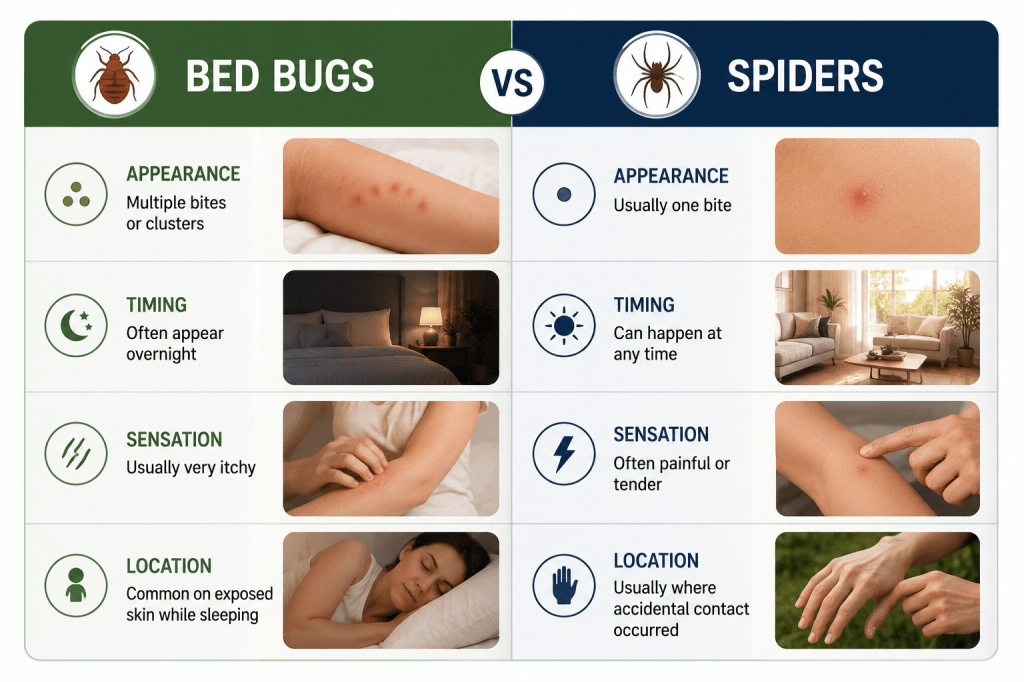
Quick Breakdown: Bed Bug Bites vs. Mosquito Bites

What Mosquito Bites Usually Look Like

Mosquito bites are commonly:

  • Random
  • Puffy
  • Raised
  • Immediately itchy
  • Spread out rather than grouped together

They also tend to appear after:

  • Outdoor events
  • Yard work
  • Evening activities
  • Cookouts
  • Sitting near standing water
  • Spending time on patios or decks

Mosquitoes are basically tiny flying syringes fueled by chaos and bad timing.

And unfortunately, summer is peak season for them.

If you spent time outdoors recently and notice a few itchy bumps later, mosquitoes are absolutely a possibility.


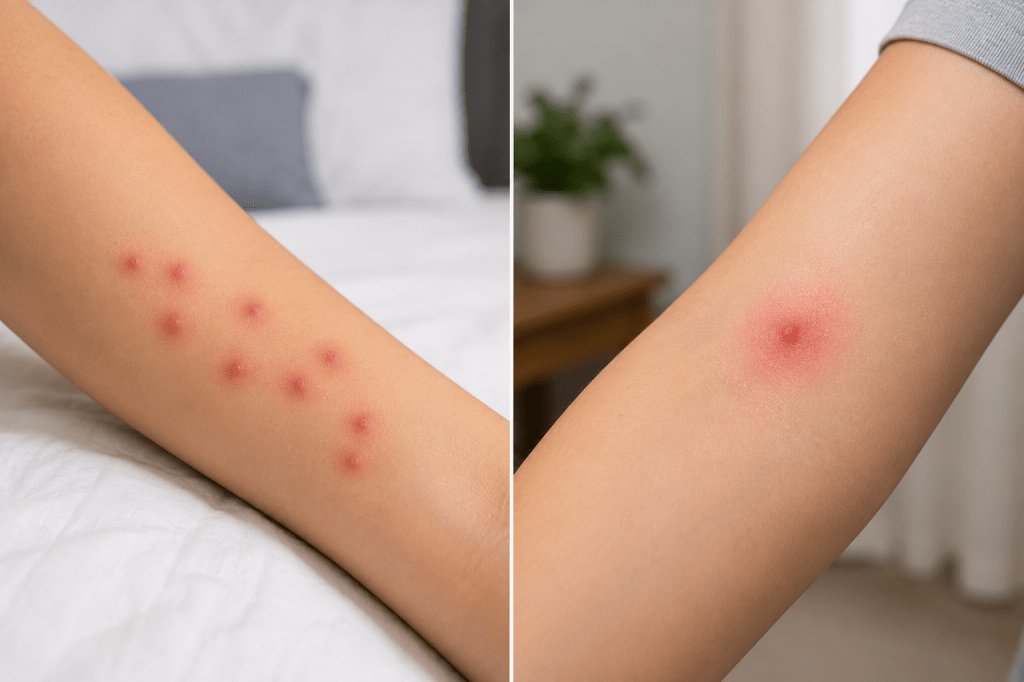
What Bed Bug Bites Can Sometimes Look Like

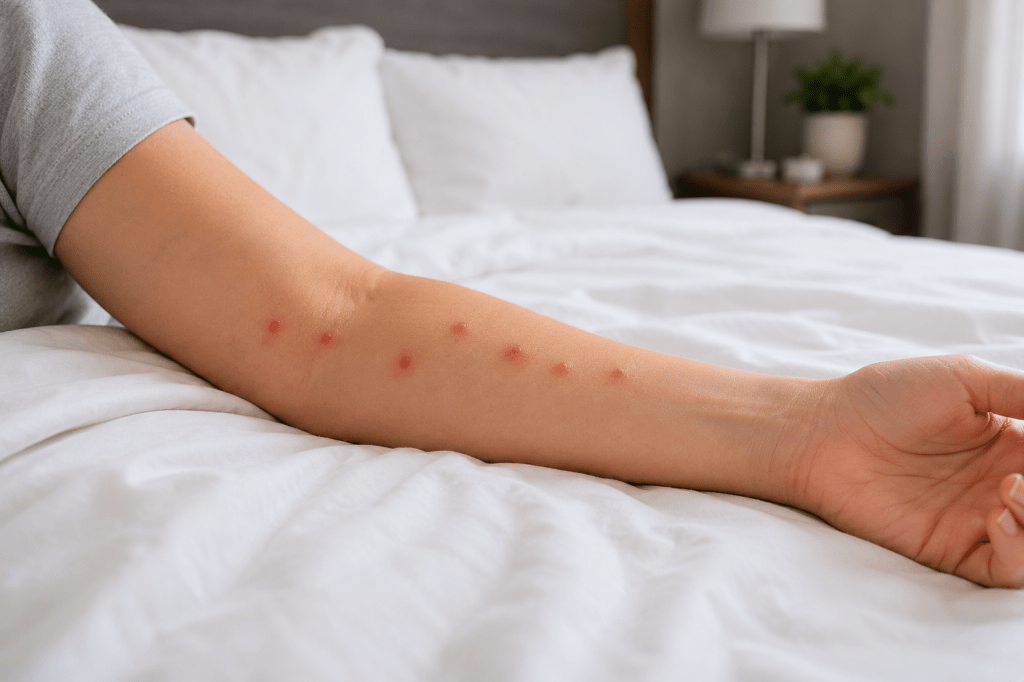
Bed bug bites are often described as:

  • Grouped together
  • Appearing in lines or clusters
  • Located on exposed skin during sleep
  • Showing up hours later

Common areas include:

  • Arms
  • Neck
  • Upper back
  • Hands
  • Shoulders
  • Legs

You’ve probably heard the phrase:

“Breakfast, lunch, and dinner.”

That expression comes from the row-like bite patterns some people experience.

But here’s the reality:

Not every bed bug case follows that pattern.

And not every grouped bite means bed bugs.

This is where people often start overanalyzing every single thing in the bedroom.

At some point, many people end up:

  • inspecting mattress seams with their phone flashlight,
  • zooming into tiny specks on their sheets,
  • and convincing themselves lint is somehow moving.

Summer bite paranoia is a real thing.


Common Myth: “Multiple Bites Means Bed Bugs”

Not necessarily.

Mosquitoes can bite more than once.
Outdoor insects can leave grouped reactions.
Even irritation from scratching can make bites appear worse or larger.

On the flip side, some confirmed bed bug cases produce very minimal skin reactions.

That’s why looking at the entire situation matters more than focusing only on the bites themselves.


Why Reactions Can Be So Different

Two people can sleep in the same room and react completely differently.

One person may develop large itchy welts.
The other may not react at all.

This can happen with both mosquito bites and bed bug bites.

Skin sensitivity, allergies, immune response, and even stress can influence how reactions appear.

That’s one reason online bite comparisons can sometimes create more confusion than answers.


Think About Where You’ve Been Recently

Sometimes the better clue is not the bite — but the environment.

Ask yourself:

  • Have you traveled recently?
  • Stayed in a hotel?
  • Had overnight visitors?
  • Used shared laundry facilities?
  • Brought home used furniture?
  • Spent a lot of time outdoors lately?

Context matters.

A few bites after an evening cookout paint a very different picture than recurring bites appearing mostly after sleeping.


The Real Question: Are You Finding Evidence?

This is the biggest difference-maker.

If bed bugs are truly involved, there is often some type of physical evidence eventually present.

Possible indicators include:

  • Small dark spotting or droppings
  • Shed skins/exoskeletons
  • Blood marks on sheets
  • Activity near mattress seams or bed frames
  • Live insects

If bites are the ONLY thing occurring, that does not automatically point to bed bugs.

At  ECO Bed Bug Exterminators Baltimore, education and accurate identification are an important part of understanding possible bed bug concerns.


What You Should NOT Do

If you wake up with suspicious bites:

Don’t:

  • Throw furniture away immediately
  • Panic after one isolated bite
  • Assume Google Images is giving you a diagnosis
  • Spray random chemicals throughout your home
  • Convince yourself every speck is a bed bug egg

DO:

  • Monitor for recurring patterns
  • Pay attention to timing
  • Check sleeping areas carefully
  • Stay calm and gather information

Summer Travel Increases Confusion

Summer naturally increases:

  • Travel
  • Hotel stays
  • Vacation rentals
  • Overnight guests
  • College move-outs
  • Shared living situations

And yes — increased travel can increase bed bug exposure risks.

But again:
Not every bite after a vacation means bed bugs.

Awareness is important.
Panic is not.

A few smart habits can help:

  • Inspect hotel sleeping areas
  • Keep luggage elevated
  • Avoid placing bags directly on beds
  • Dry travel clothing on high heat after trips
  • Monitor unexplained recurring bites

Final Thoughts

When mysterious bites appear during summer, it’s easy for people to jump straight to worst-case scenarios.

But the reality is:
Mosquito bites and bed bug bites can look surprisingly similar.

That’s why looking at:

  • timing,
  • patterns,
  • travel exposure,
  • sleeping habits,
  • and actual evidence

is much more helpful than relying on bites alone.

At  ECO Bed Bug Exterminators Baltimore, we believe good information matters. Understanding the difference between mosquito bites and possible bed bug activity can help people stay informed without immediately assuming the worst.

And remember:

Not every summer bite is a bed bug.

Sometimes it’s just a mosquito having a very successful evening.

Call (410) 929-3420 to schedule your inspection, or click here to submit a request online.

Homeowners Insurance & Bed Bugs in Maryland

For homeowners across Baltimore, Rockville, Silver Spring, Bethesda, and surrounding Maryland communities, the reality is:

👉 Bed bugs are not covered under standard homeowners insurance policies.

Why?

Insurance is designed to cover:

  • Sudden damage
  • Unexpected events
  • Accidental losses

Bed bugs don’t meet that criteria.

Instead, they are viewed as:
👉 A maintenance-related issue that develops over time


💰 What Maryland homeowners should expect

If bed bugs are discovered:

  • Treatment is typically out-of-pocket
  • Costs often range from $1,000 to $2,500+ depending on severity and spread

👉 In dense areas like Baltimore City or multi-unit housing in Montgomery County, infestations can escalate quickly if not addressed early.


⚠️ Are there any exceptions?

Rarely:

  • If tied to a covered event (uncommon)
  • If a specialty insurance rider was purchased

👉 Most Maryland homeowners do not have these add-ons.


🏢 Renters Insurance in Maryland

For tenants in apartments, condos, and townhomes throughout Maryland, this is a key point:

👉 Renters insurance does NOT cover bed bug infestations.


🚫 What renters insurance excludes

  • Extermination services
  • Cleaning and preparation
  • Mattress and furniture replacement
  • Temporary relocation

👉 Bed bugs are classified as preventable—not accidental.


⚖️ Landlord vs Tenant Responsibility in Maryland

This is where Maryland-specific context matters.

In areas like:

  • Baltimore City
  • Prince George’s County
  • Montgomery County

👉 Bed bugs are taken seriously due to the density of housing.


🏢 In multi-unit buildings:

  • Bed bugs can easily spread between units
  • The original source may be difficult to determine

In many cases:

  • Landlords are expected to respond to complaints and investigate
  • Treatment may involve adjacent or surrounding units

👉 Especially in apartment communities and shared housing environments.


⚠️ The Reality: The “Blame Game”

This happens all the time:

  • Tenant says: “I didn’t bring them”
  • Landlord questions responsibility
  • Insurance provides no coverage

👉 And now no one wants to take ownership.


🧾 Why Professional Documentation Matters in Maryland

A professional inspection is critical—especially in multi-unit properties in Baltimore and surrounding counties.

It provides:

  • Verified findings
  • Identification of affected areas
  • Documentation that can support:
    • Property management decisions
    • Tenant/landlord communication
    • Next-step planning

👉 In many Maryland cases, documentation is what helps move the process forward.


✈️ Travel & Bed Bugs (A Common Source in Maryland)

Travel plays a major role in bed bug introductions—especially in high-traffic areas like:

  • Baltimore (tourism, business travel)
  • Washington, DC metro area (commuters & travelers)

👉 Bed bugs are often brought home unknowingly.


🚫 What travel insurance won’t cover

  • Hotel changes
  • Trip cancellations
  • Cleaning belongings
  • Replacing luggage

⚠️ What may be covered

  • Medical care related to bites (policy dependent)

🧳 The real concern

👉 By the time you return home to Maryland:

  • Insurance won’t help
  • The issue may already be spreading

🛡️ Prevention Tips for Maryland Homes & Apartments

  • Inspect luggage after travel
  • Be cautious with secondhand furniture
  • Keep sleeping areas accessible
  • Consider mattress encasements
  • Watch for early signs (bites, spotting, shed skins)

👉 Early detection is especially important in multi-unit housing common throughout Maryland


🧠 The Bottom Line

👉 In Maryland, just like the rest of the U.S.:
There is typically no insurance coverage for bed bugs.


🛑 Final Thought

Insurance won’t solve it.
Waiting makes it worse.
And guessing wrong can cost more than getting it checked.


📞 For Maryland Residents: Don’t Wait

If you suspect bed bugs in Baltimore, Montgomery County, Prince George’s County, or nearby areas:

  • Don’t rely on guesswork
  • Don’t wait for it to spread
  • Don’t assume insurance will cover it

✔️ Get a professional inspection
✔️ Confirm what you’re dealing with
✔️ Take action early

Call (410) 929-3420 to schedule your inspection, or click here to submit a request online.

🛏️ Bed Bugs in Maryland Rental Properties Are Increasing — What Landlords Need to Know

If you own or manage rental property in Maryland, there’s a growing issue that’s becoming harder to ignore:

Bed bug activity is on the rise—especially in rental housing.

While reports from other regions are starting to highlight this trend, what matters most is what’s happening locally.

👉 Across Maryland, we’re seeing a noticeable increase in bed bug cases tied directly to rental turnover and multi-unit living.


📊 Why Rental Properties in Maryland Are More Vulnerable

Rental properties naturally carry higher risk—and in many Maryland communities, that risk is amplified.

🔄 Frequent Move-Ins & Move-Outs

Each new tenant brings the potential for introduction. Bed bugs are commonly transported through:

  • Luggage
  • Furniture
  • Personal belongings

🏢 Multi-Unit Living Environments

In apartments, condos, and shared housing, bed bugs don’t stay confined.

They can move:

  • Through shared walls
  • Along plumbing and utility lines
  • Between neighboring units without immediate detection

In areas like Baltimore and surrounding counties, we regularly see infestations spread beyond the original source.


⏳ Delayed Reporting from Residents

Many tenants don’t report early signs right away.

Common reasons include:

  • Uncertainty about what they’re seeing
  • Attempting DIY treatments
  • Hoping the issue resolves

👉 Unfortunately, this delay allows the problem to grow and spread.


🔬 Why Bed Bug Infestations Are More Challenging Today

Bed bug control isn’t as simple as it used to be—and that’s something many property owners don’t realize.

🧬 Increased Resistance

Bed bugs have developed resistance to many common treatments.

👉 This makes proper identification and professional application critical.


🕵️ Hidden Activity in Unexpected Areas

We’re finding bed bugs in places many people don’t think to check:

  • Behind baseboards
  • Inside furniture joints
  • Around outlets and fixtures
  • Along floor and wall seams

👉 Missing even small areas can lead to reinfestation.


🚪 Infestations Grow Before They’re Detected

By the time visible signs appear:

  • The infestation is rarely isolated
  • Multiple rooms—or units—may already be involved

⚠️ What Happens When Action Is Delayed

One of the most common—and costly—mistakes is waiting too long.

What starts as a minor issue can quickly turn into:

  • Multiple units requiring treatment
  • Tenant dissatisfaction and complaints
  • Negative reviews impacting property reputation
  • Increased operational and legal concerns

👉 In rental properties, timing is everything.


🔍 What We’re Seeing Across Maryland

At ECO Bed Bug Exterminators, we’re consistently seeing:

  • Activity reported shortly after new tenants move in
  • Infestations spreading between adjacent units
  • DIY efforts making situations worse
  • Calls coming in after the issue has escalated

👉 The pattern is clear:
Most cases could have been contained earlier with faster response.


🚫 Why DIY Treatments Don’t Work in Rental Settings

Store-bought solutions often create a false sense of control.

In reality:

  • They rarely eliminate the infestation
  • They can push bed bugs deeper into hiding
  • They increase the likelihood of spread to nearby units

👉 This often leads to more extensive and costly treatment later.


❗ Common Mistakes Property Owners Make

Here’s where things typically go wrong:

1. Waiting for clear confirmation

By the time it’s obvious, it’s already advanced.


2. Treating only the affected unit

Bed bugs often extend beyond what’s visible.


3. Relying on non-specialized treatments

Improper methods rarely solve the issue.


4. Delaying professional involvement

Time directly impacts severity and cost.


5. Not having a preventative strategy

Reactive approaches lead to repeat issues.


✅ A More Effective Approach for Maryland Properties

The key to controlling bed bugs is being proactive.

✔ Early Inspection

Identify the issue before it spreads.

✔ Quick Response

Address concerns immediately—even minor ones.

✔ Targeted Professional Treatment

Apply the right methods, in the right areas.

✔ Preventative Programs

Reduce the likelihood of future infestations.


🛡️ Protect Your Property Before It Escalates

Bed bugs don’t go away on their own—and they rarely stay contained.

👉 The difference between a manageable issue and a widespread problem is how early you take action.


📞 Schedule a Bed Bug Inspection in Maryland

At ECO Bed Bug Exterminators, we specialize exclusively in bed bugs.

We work with:

  • Property managers
  • Landlords
  • Multi-unit communities
  • Rental property owners

Our services include:

  • Detailed inspections
  • Targeted treatment solutions
  • Preventative service programs
  • Discreet, professional service

Call (410) 929-3420 to schedule your inspection, or click here to submit a request online.


🔑 Final Takeaway

If you own or manage rental property in Maryland:

👉 Don’t wait for the problem to grow
👉 Don’t rely on temporary fixes
👉 Don’t assume it’s contained

Early action is the difference between control and escalation.

Because with bed bugs…
what starts small doesn’t stay small.


🔎 Quick Answers

Are bed bugs increasing in Maryland rental properties?
Yes. Increased tenant turnover and multi-unit living conditions are contributing to a rise in bed bug activity across Maryland.

Why are apartments at higher risk for bed bugs?
Shared walls and close living quarters allow bed bugs to spread between units more easily.

Can bed bugs spread between apartments?
Yes. Bed bugs can travel through walls, plumbing, and shared structural areas.

🎓 College Students Headed Home for the Summer?

What Maryland Families Should Know About Bed Bugs This Month

May is one of the busiest moving times of the year across Maryland.

College students are packing up dorms, clearing out apartments, and heading home—from College Park and Towson to Baltimore and Salisbury.

Most families are focused on:
✔ Laundry
✔ Storage
✔ Getting everything settled back in

But very few are thinking about this:

What might be coming home with them.


🧠 Why This Happens More Than You Think in Maryland

In Maryland, many students live in:

  • Shared apartments
  • Multi-unit buildings
  • High-turnover housing near campuses

Add in frequent travel, visitors, and shared laundry spaces, and you get one key factor:

👉 Constant movement between people, spaces, and belongings

That’s exactly how bed bugs spread.

This isn’t about cleanliness—it’s about exposure.


🧳 What Students Might Bring Home (Without Realizing It)

Bed bugs don’t live on people.
They move quietly through items.

The most common carriers we see include:

  • Suitcases stored under or beside beds
  • Laundry baskets moving between rooms or facilities
  • Backpacks placed on shared furniture
  • Bedding used in multiple environments
  • Storage bins that haven’t been opened in months

Nothing about these items looks suspicious—which is why they’re often overlooked.


🚚 The Overlooked Risk: Moving Trucks & Vans

There’s another exposure point most families don’t think about during move-out:

Rental moving trucks and vans, such as U-Haul.

These vehicles:

  • Are used by multiple households back-to-back
  • Transport mattresses, couches, and upholstered furniture
  • Are not routinely sanitized between uses

That means bed bugs can be left behind—and picked up by the next person using the truck.


🏠 What Smart Maryland Homeowners Do Differently

This isn’t about overreacting—it’s about being intentional.

✔ They control how items enter the home

Instead of bringing everything straight inside:

  • Items go into a garage, laundry room, or entryway first
  • Nothing goes directly into bedrooms

✔ They process items in stages

  • Clothing is bagged first
  • Then dried on high heat
  • Then put away

Not all at once—and not loosely.


✔ They pay attention to the details

  • Suitcase seams and zippers
  • Mattress edges
  • Upholstered furniture
  • Items that haven’t been moved in a while

That’s where problems usually start.


⚠️ Where Things Usually Go Wrong

Most issues don’t come from obvious situations—they come from small oversights:

  • Everything gets brought inside at once
  • Furniture goes straight into bedrooms
  • Luggage sits unpacked for days
  • No one takes a closer look

👉 That’s all it takes.


👀 What to Watch for After Move-In

You don’t need to panic—but you do need to be aware.

Over the next couple of weeks, pay attention to:

  • Unexplained bites that repeat
  • Small dark spotting along seams or edges
  • Anything that doesn’t look quite right

If something feels off, it’s worth checking.


💬 When It Makes Sense to Have a Professional Take a Look

Sometimes everything looks fine—but you still don’t feel 100% sure.

That’s actually when a professional inspection makes the most sense:

  • After a move-in
  • After bringing in multiple items
  • Or when you just want confirmation

It’s easier to check early than to deal with something later.


🧠 Why Experience Matters

Bed bugs aren’t always obvious.

Knowing where to look—and what you’re actually seeing—is what makes the difference.

At ECO Bed Bug Exterminators, we specialize exclusively in bed bugs, which allows us to:

  • Identify early-stage activity
  • Focus on high-risk areas most people overlook
  • Provide clear, realistic next steps

No guessing. No assumptions.


🎯 Final Thought

Bringing your college student home should feel like a reset—not a risk.

A little structure during move-in can prevent:

  • Weeks of uncertainty
  • Disruption inside your home
  • A situation that’s harder to unwind later

📞 Need Peace of Mind?

If your student is coming home—or already has—and you want to be sure your Maryland home is protected:

Call (410) 929-3420 to schedule your inspection, or click here to submit a request online.


📍 Serving Maryland Communities

We work with homeowners and property managers throughout Maryland, including:

  • Baltimore County
  • Montgomery County
  • Prince George’s County
  • And surrounding areas

Everyday Places Where Bed Bugs May Be Introduced

Rideshare Vehicles (Uber and Lyft)

Rideshare services transport many passengers throughout the day.

If a person unknowingly has bed bugs in their belongings, a bug may fall onto a seat and remain there until the next passenger enters the vehicle.

While this situation is uncommon, it does demonstrate how easily bed bugs can travel between locations.

Public Transportation

Buses, trains, and subway systems serve thousands of passengers daily.

With so many people sharing the same seating areas, it’s possible for bed bugs to occasionally be introduced into public transportation environments.

Movie Theaters

Movie theaters have large numbers of cushioned seats that are used by many visitors each day.

If someone unknowingly carries bed bugs into the theater, the insects may temporarily hide in the seating until they attach to a new host or item.

Libraries

Libraries are popular community spaces where visitors often spend long periods sitting in reading areas or study rooms.

Upholstered chairs, couches, and study areas can occasionally become temporary locations where bed bugs appear if someone unknowingly brings them into the building.

Medical Offices and Waiting Rooms

Doctor’s offices and medical waiting areas often have shared seating where visitors sit for extended periods of time.

Because patients bring coats, purses, backpacks, and personal belongings from home, bed bugs can occasionally be introduced into these environments.

Churches and Community Centers

Large gatherings in places such as churches or community centers bring many people together in shared seating areas.

Coats and personal items placed on chairs or pews can create opportunities for hitchhiking bed bugs to move between belongings.

Government Buildings and Courthouses

Government offices and courthouses see heavy daily traffic.

With so many visitors moving through waiting areas and seating sections, bed bugs can occasionally appear in these locations.

Offices and Workplaces

Employees often bring personal items from home into the workplace, including:

• laptop bags

• purses

• jackets

• backpacks

If someone unknowingly has bed bugs at home, one could hitch a ride into the workplace.

Second-Hand Furniture

Used furniture is one of the most common ways bed bugs are introduced into homes.

Items purchased from:

• thrift stores

• yard sales

• online marketplaces

• curbside pickups

should always be inspected carefully before bringing them indoors.

Why Bed Bugs Spread So Easily

Bed bugs do not jump or fly.

Instead, they rely on hitchhiking to move from one location to another.

They often travel on:

• clothing

• purses

• backpacks

• luggage

• laptop bags

Once inside a new location, they search for a place to hide and begin reproducing.

Bed Bugs Are Not a Sign of Poor Cleanliness

One of the biggest misconceptions about bed bugs is that they only appear in dirty environments.

In reality, bed bugs can be found in clean homes, luxury hotels, offices, and public buildings.

They are simply insects that travel well and take advantage of opportunities to move between locations.

Signs You May Have Bed Bugs

If you notice any of the following, it may be a good idea to schedule a professional inspection:

• unexplained bites

• small rust-colored stains on bedding

• tiny black fecal spots

• shed skins

• live insects

Early detection can make treatment much easier and prevent the problem from spreading further.

Bed Bug Concerns in Baltimore and Surrounding Areas

Like many large metropolitan areas, Baltimore and the surrounding counties occasionally experience bed bug activity due to the high amount of travel and movement between homes, apartments, offices, and public spaces.

Because people regularly commute throughout the region, bed bugs can easily move between locations such as:

• Baltimore City

• Towson

• Columbia

• Catonsville

• Ellicott City

• Glen Burnie

• Owings Mills

• Dundalk

This is why early detection and professional inspections are important if you suspect possible bed bug activity in your home or apartment.

Professional Bed Bug Help in Baltimore

If you believe you may have encountered bed bugs or are experiencing signs of an infestation, a professional inspection can help determine the next steps.

At ECO Bed Bug Exterminators, our technicians specialize exclusively in bed bug detection and treatment.

Because bed bugs are the only pest we focus on, our team is trained to identify activity quickly and recommend the most effective treatment solutions.

If you believe you may have bed bugs, scheduling a professional bed bug inspection in Baltimore can help confirm the problem quickly. Contact us at 📞 410-929-3420 or click the link to fill out the inspection form.

Frequently Asked Questions About Bed Bugs

Can you get bed bugs from public places?

Yes. Bed bugs are hitchhikers and can occasionally be introduced into public places such as movie theaters, libraries, public transportation, or waiting rooms.

Do bed bugs only come from hotels?

No. While travel is a common source, bed bugs can appear anywhere people gather and where belongings move between locations.

How do bed bugs spread between homes?

Bed bugs spread by hitchhiking on clothing, luggage, bags, or furniture.