
Is Your Home Bed Bug Ready? Add This to Your September Preparedness Checklist

Flashlights? Check.
Batteries? Check.
First-aid kit? Check.
Bed bug plan? Probably not.

September is National Preparedness Month, and while bed bugs aren’t exactly an emergency-kit essential, knowing what to do before you encounter them can save you a lot of stress later.

And if you’re traveling this fall, a little bed bug preparedness can go a long way.

Before You Travel: Take a Quick Look

Hotels and vacation rentals have people—and their luggage—coming and going every day. Bed bugs are excellent hitchhikers, so it makes sense to take a quick look before settling in.

When you arrive:

  • Keep your luggage off the bed while you check the room.
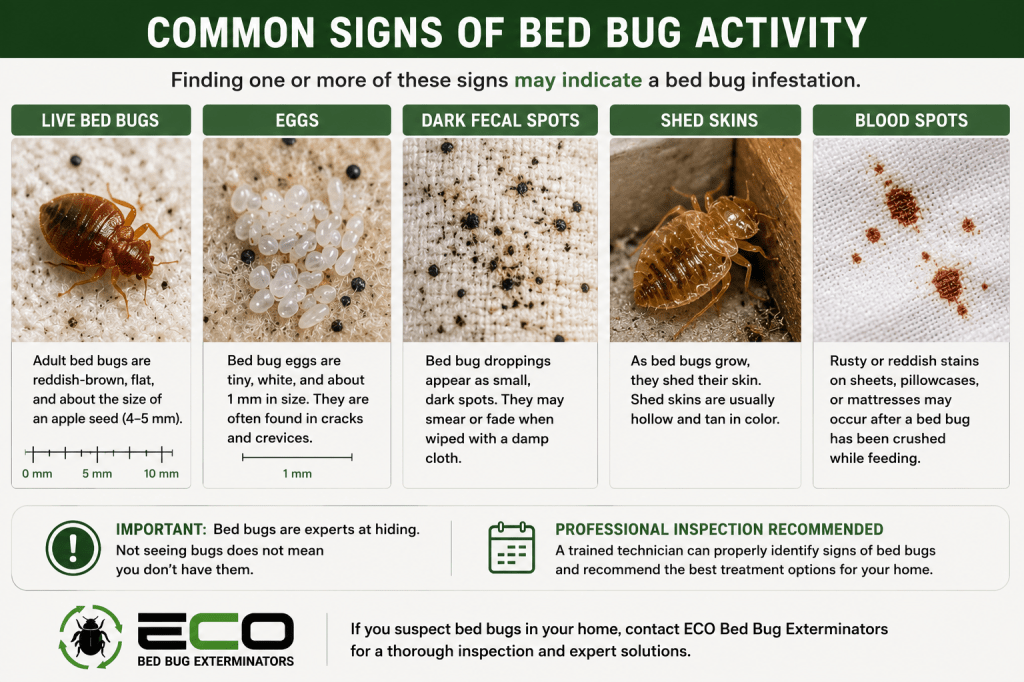
  • Look along mattress seams, the headboard and nearby furniture for suspicious dark spotting, shed skins or live bugs.
  • Use a luggage rack when available and keep it away from the bed and wall.
  • Avoid leaving clothing scattered around the room.

You don’t need to dismantle the hotel room.

A quick, sensible inspection is enough.

Don’t Let Your Suitcase Bring Home an Extra Souvenir

Vacation memories? Absolutely.

Bed bugs? They can stay behind.

When you return home, avoid putting your suitcase directly on your bed.

Inspect the luggage around seams, pockets and zippers. For clothing that can safely tolerate high heat, follow the garment’s care instructions when laundering and drying.

Those few extra minutes after a trip could help prevent an unwanted hitchhiker from settling into your home.

At Home: Know What to Do

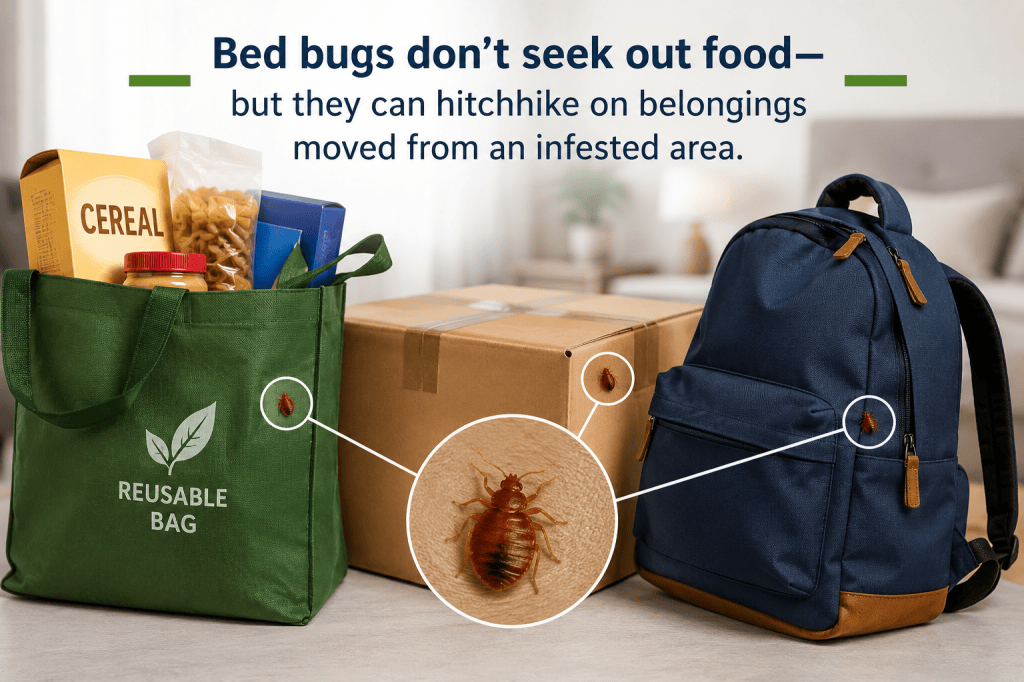
Travel isn’t the only way bed bugs can be introduced. They can also hitch a ride on secondhand furniture, backpacks, personal belongings and items moving between different environments.

The goal isn’t to worry about everything entering your house.

It’s simply to recognize something suspicious and know what to do next.

Remember the 3 Don’ts

Don’t spray. Don’t relocate. Don’t panic.

If you suspect bed bugs:

  • Don’t immediately start spraying. First, determine what you’re actually dealing with.
  • Don’t move potentially affected belongings from room to room. This could spread bed bugs to new areas.
  • Don’t panic. Take a clear photo or save the insect when possible and have it properly identified.

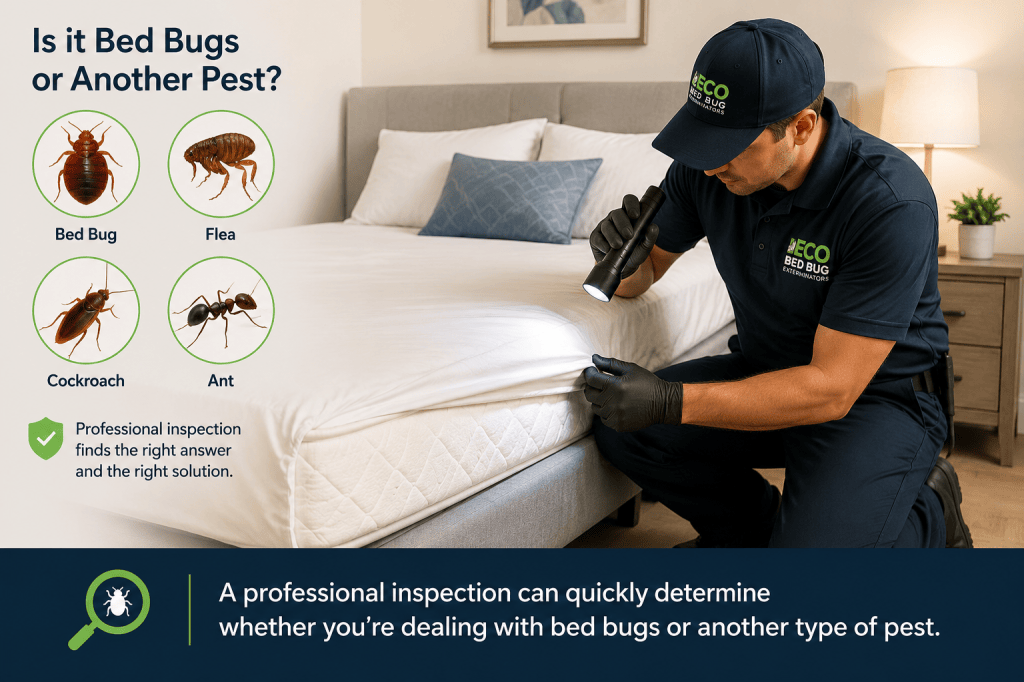
A professional inspection can help determine whether bed bugs are actually present and, if so, how widespread the activity may be.

Prepared Doesn’t Mean Paranoid

This may be the most important part.

You don’t need to inspect every person who walks through your door or treat every suitcase like it’s carrying contraband.

Bed bug preparedness simply means knowing the signs, reducing unnecessary risks and having a plan if something happens.

That’s smart preparedness in September—and all year long.

Add Bed Bugs to Your Preparedness Plan

National Preparedness Month is about taking small steps today that can make unexpected situations easier to handle tomorrow.

At ECO Bed Bug Exterminators, we help homeowners throughout Maryland identify bed bug activity through professional inspections and provide treatment options based on what we find.

If something suspicious follows you home from your travels, don’t guess. Have it properly identified and determine the right next step.

Call (410) 929-3420 to schedule your inspection, or click here to submit a request online

Bed Bug Bites vs. Spider Bites: How to Tell the Difference

Waking up with itchy bites can be frustrating—and a little alarming.

One of the most common questions we hear is:

“Are these bed bug bites or spider bites?”

While the two can look similar, there are a few important differences that can help you determine which pest may be responsible.


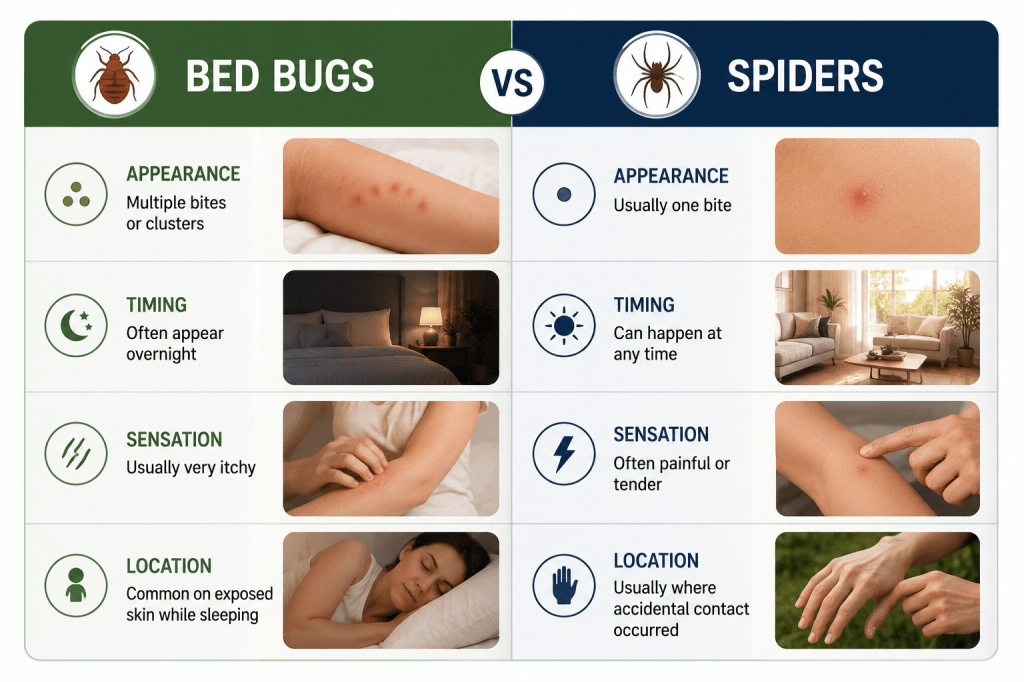
Bed Bug Bites

Bed bugs feed on blood while people are sleeping, so their bites usually appear after you’ve spent the night in bed.

Common signs include:

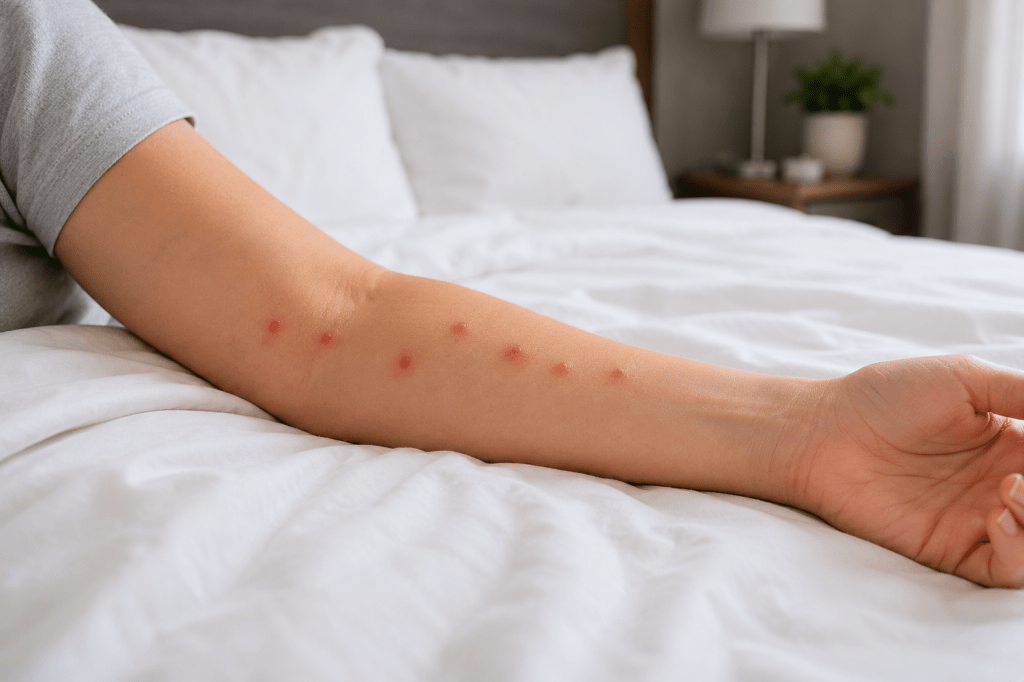
  • Several bites grouped together or in a line.
  • Small, red, itchy bumps.
  • Bites on exposed skin such as the arms, shoulders, neck, face, or legs.
  • New bites appearing after sleeping.

Bed bug bites alone don’t confirm an infestation, but they’re often accompanied by other signs such as blood spots on sheets, dark fecal spotting, shed skins, or live bed bugs.


Spider Bites

Spider bites are usually much less common than people think.

Unlike bed bugs, spiders don’t feed on people. Most bites happen when a spider becomes trapped against the skin or feels threatened.

Spider bites are more likely to be:

  • A single bite rather than several.
  • Painful or tender shortly after the bite.
  • Surrounded by redness or swelling.
  • Located on the hands, arms, legs, or other areas where accidental contact occurs.

Most spider bites are minor, but severe pain, blistering, fever, or worsening symptoms should be evaluated by a medical professional.


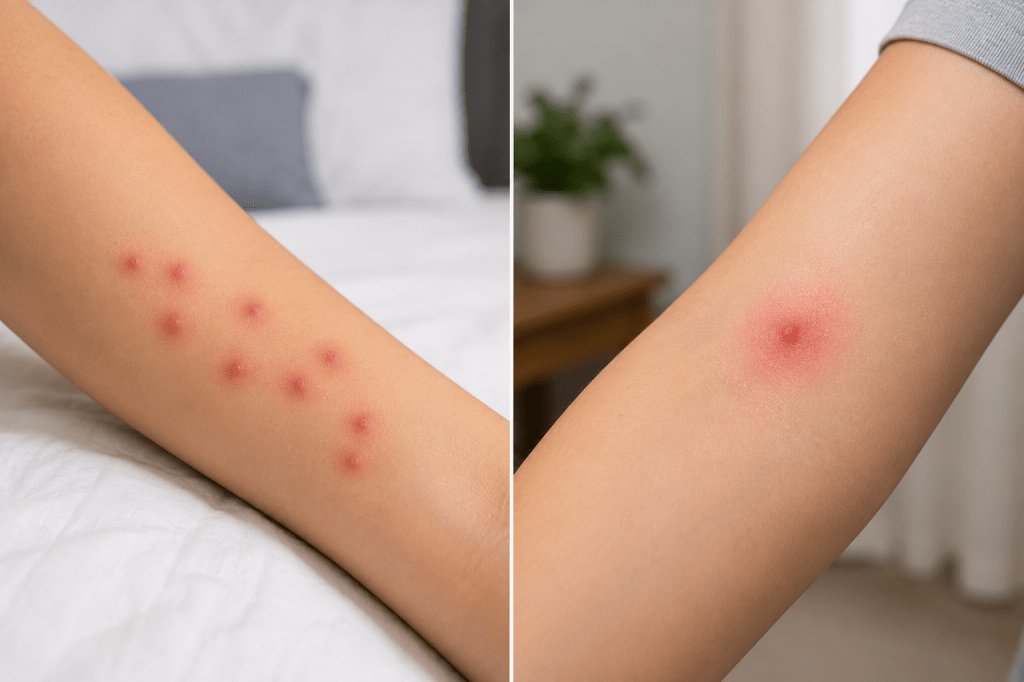
Bed Bug Bite vs. Spider Bite


💡 ECO Expert Tip

A side-by-side medical-style illustration showing a forearm with several clustered bed bug bites compared with another forearm showing a single spider bite surrounded by mild redness. Clean, realistic, no text.

Bites alone should never be used to diagnose a bed bug infestation.

Many skin conditions—including mosquito bites, flea bites, allergic reactions, and even certain medical conditions—can look very similar. The most reliable way to confirm bed bugs is by finding physical evidence of the insects.


Common Questions

Can you identify bed bugs by the bites alone?

No. Bite reactions vary from person to person, and many other insects can leave similar marks.

Do bed bug bites always itch?

Most people experience itching, but some people have little or no reaction at all.

Should I worry about spider bites?

Most spider bites are harmless. However, severe pain, blistering, fever, or worsening symptoms should be evaluated by a healthcare provider.


🐞 Did You Know?

Some people show no visible reaction at all after being bitten by bed bugs, while others may develop significant itching and swelling. That’s why professional inspections rely on finding evidence of bed bugs—not just bite marks.


Think You May Have Bed Bugs?

If you’re waking up with unexplained bites and aren’t sure what’s causing them, a professional inspection can help identify whether bed bugs—or another pest—is responsible.

Our experienced technicians provide thorough inspections and customized treatment plans designed to eliminate bed bugs safely and effectively.

Contact us today to schedule a professional inspection and get the answers you need.

Bed Bugs vs. Carpet Beetles: How to Tell the Difference

Think you have bed bugs? Many homeowners actually discover carpet beetles instead. Learn the key differences between bed bugs, carpet beetles, bites, signs, and when it’s time to schedule an inspection.

Finding small insects or unexplained skin irritation in your home can be alarming. Many people immediately assume they have bed bugs, but that’s not always the case. At ECO Bed Bug Exterminators, we’ve performed countless inspections where homeowners were convinced they had bed bugs, only to discover the problem was actually carpet beetles.

Although both pests can be found in bedrooms, they behave very differently, require different treatments, and leave different signs behind. Understanding those differences can help you decide what steps to take next.


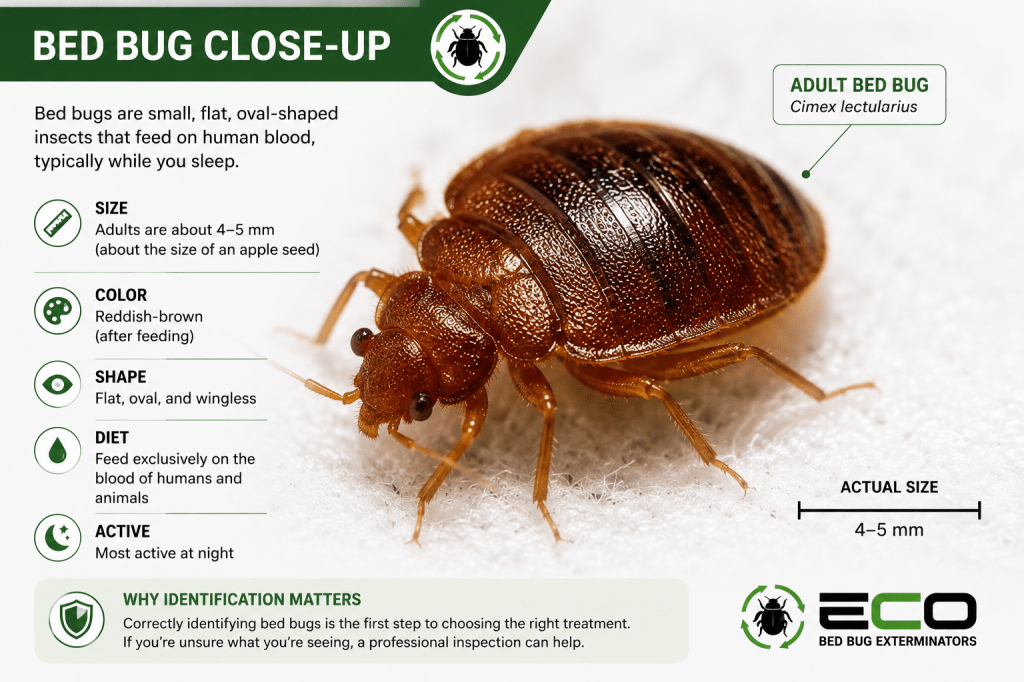
What Are Bed Bugs?

Bed bugs are small, reddish-brown insects that feed exclusively on blood, usually while people are sleeping. They typically hide close to where people rest, including:

  • Mattress seams
  • Box springs
  • Bed frames
  • Headboards
  • Nightstands
  • Upholstered furniture
  • Cracks and crevices near the bed

Because they feed on blood, bed bugs leave behind specific evidence that trained inspectors look for during an inspection.


What Are Carpet Beetles?

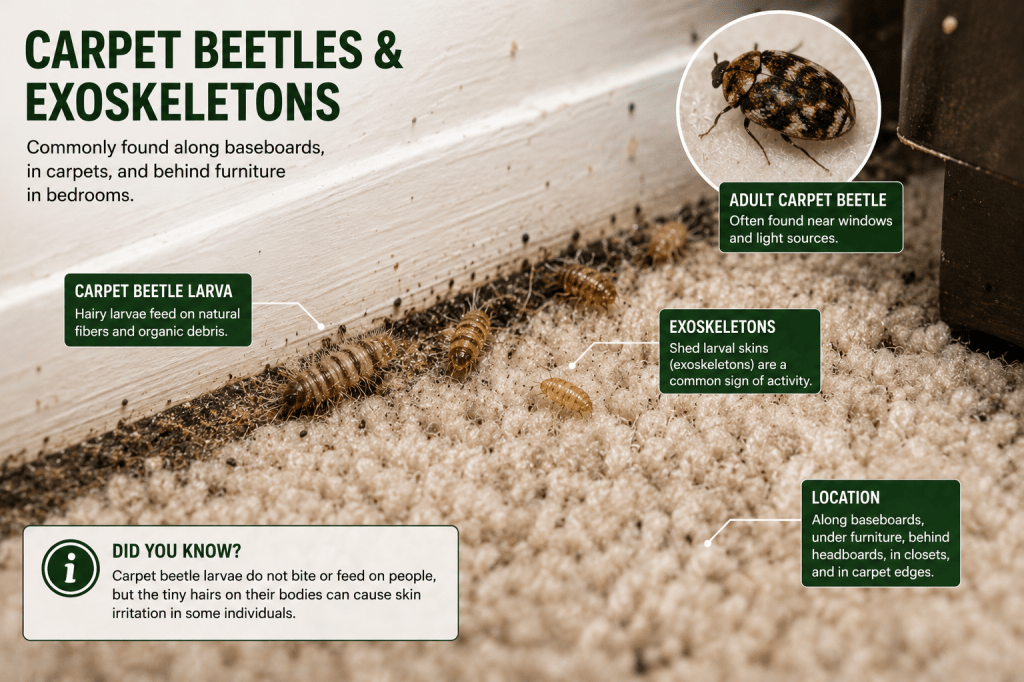
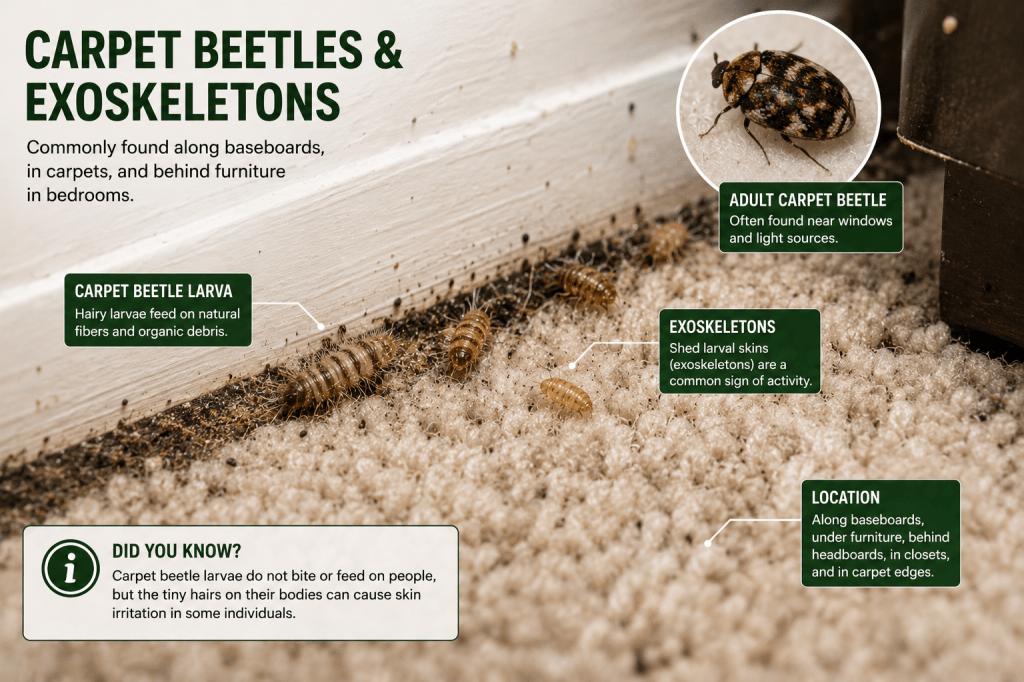
Carpet beetles are small insects that feed on natural materials such as wool, feathers, silk, fur, pet hair, lint, and other organic fibers. Unlike bed bugs, carpet beetles do not feed on people.

The larvae are covered with tiny hairs that can cause skin irritation in some individuals. This reaction is often mistaken for bed bug bites.

Adult carpet beetles are commonly found near windows because they are attracted to light.

Bed Bugs vs. Carpet Beetles: Quick Comparison

Can Carpet Beetles Cause Skin Irritation?

Yes.

Although carpet beetles do not bite, some people develop an allergic reaction when their skin comes into contact with the tiny hairs left behind by carpet beetle larvae.

These reactions can resemble insect bites, making it easy to mistake them for bed bugs. Because skin reactions can have many possible causes, it’s important not to rely on skin irritation alone to determine whether bed bugs are present. If you have persistent or concerning skin symptoms, consult a healthcare provider or dermatologist.


Signs of Bed Bugs

Common signs include:

  • Live bed bugs
  • Tiny white eggs
  • Black fecal spots
  • Shed skins
  • Blood spots on bedding
  • Multiple bugs hiding around the bed

Signs of Carpet Beetles

Common signs include:

  • Small shed larval skins (exoskeletons)
  • Tiny larvae with bristly hairs
  • Damage to wool, clothing, rugs, or upholstered items
  • Adult carpet beetles near windows
  • Larvae behind headboards, under furniture, in closets, or along baseboards

Why People Confuse Them

Many homeowners contact us because they wake up with unexplained skin irritation and immediately suspect bed bugs. During an inspection, however, our technicians sometimes find carpet beetle exoskeletons instead of any evidence of bed bugs.

That’s why a thorough inspection is important before deciding on a treatment plan. Treating for bed bugs when the actual issue is carpet beetles—or another cause entirely—can waste time and money.


When Should You Schedule an Inspection?

If you’re experiencing unexplained bites or skin irritation but haven’t found clear evidence of bed bugs, a professional inspection can help identify what’s actually causing the problem.

An inspection may help determine whether the issue involves:

  • Bed bugs
  • Carpet beetles
  • Another household pest
  • No evidence of an active bed bug infestation

Identifying the correct issue first allows you to choose the most appropriate next steps.


Frequently Asked Questions

Can carpet beetles bite?

No. Carpet beetles do not bite or feed on people. However, some individuals may experience skin irritation from the hairs on carpet beetle larvae.

Do carpet beetles live in beds?

They can occasionally be found around beds, especially if natural fibers, dust, lint, or pet hair are present. Unlike bed bugs, they are not dependent on beds for food.

Can I have both bed bugs and carpet beetles?

Yes. Although uncommon, it’s possible for both pests to be present in the same home. A professional inspection can help determine what evidence is actually present.

Should I throw away my mattress?

Not necessarily. A mattress usually does not need to be discarded simply because bed bugs or carpet beetles are suspected. The right approach depends on the inspection findings.


Need Help Identifying the Problem?

If you’re unsure whether you’re dealing with bed bugs or carpet beetles, ECO Bed Bug Exterminators can help. Our inspections are designed to identify evidence of bed bug activity and help you understand the next steps based on what is found.